

Cleanroom Apparel Classification & Application Reference
| Classification Basis | Type | Core Fabric & Technical Characteristics | Typical Application Fields & Scenarios |
|---|---|---|---|
| By Style & Coverage | Coverall | Integrated one-piece design (hood, jacket, trousers), commonly as two-piece (hood-jacket) or three-piece (full body). Features high-density weave and sealed seams. | Semiconductor wafer fabrication, advanced microelectronics, sterile biopharmaceutical production, high-standard cleanrooms (Class 100 and above). |
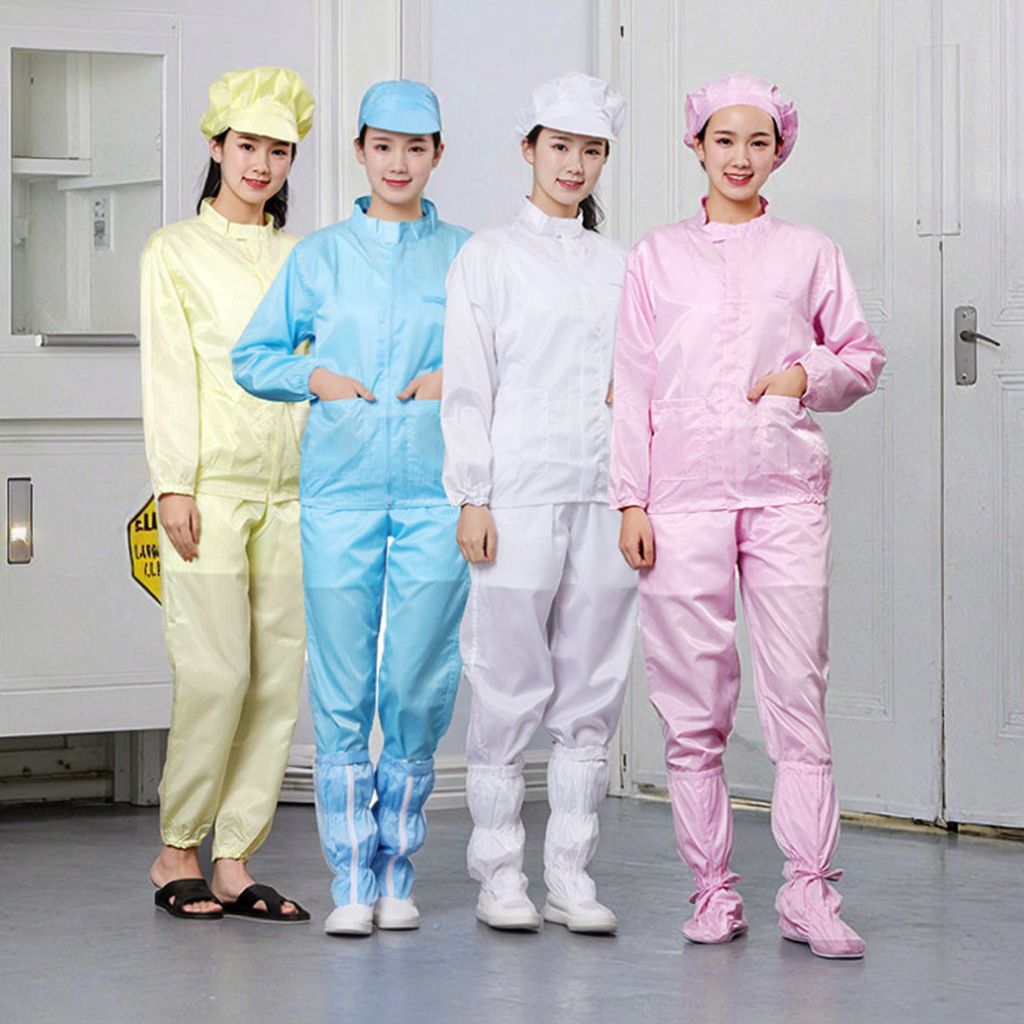
| Two-Piece Apparel | Separate jacket (often with attached hood) and trousers. Fabric combines static control with low particle emission, balancing mobility and protection. | Electronics assembly (SMT), medical device manufacturing, LCD panel module assembly, cleanrooms (Class 1K to 100K). | |
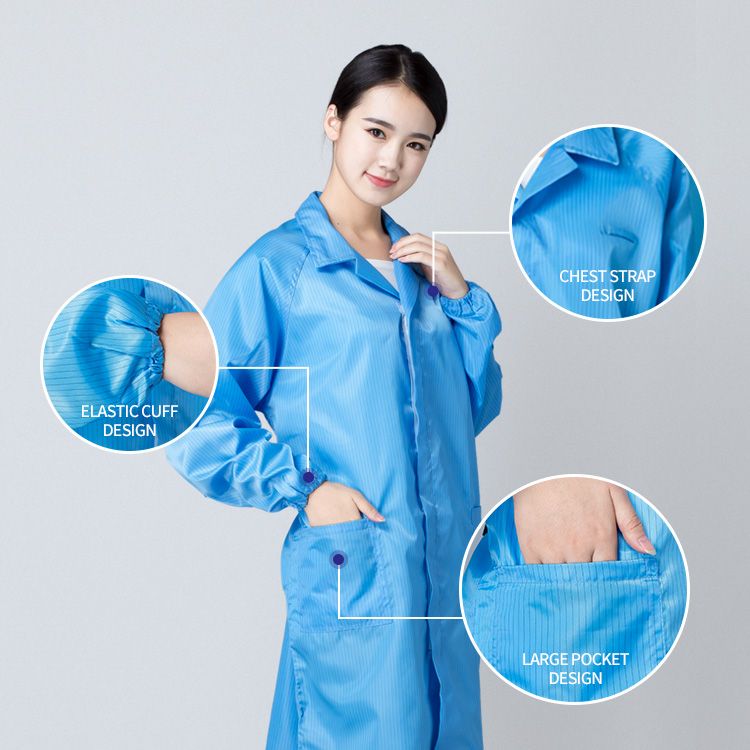
| Lab Coat / Smock | Open-front full-length coat. Typically made from basic static-control fabric for easy donning/doffing. | Cleanroom visitors, controlled areas of lower classification (e.g., packaging, QA labs), maintenance access zones. | |
| By Core Functional Fabric | Carbon-Loaded Conductive Fabric | Woven with carbon fibers or composite conductive filaments, providing a permanent and stable conductive path. Fixed surface resistivity range (typically 10⁵ – 10⁹ Ω). | Areas with stringent ESD control: HDD manufacturing, aerospace electronics, semiconductor packaging & testing, hazardous explosive environments. |
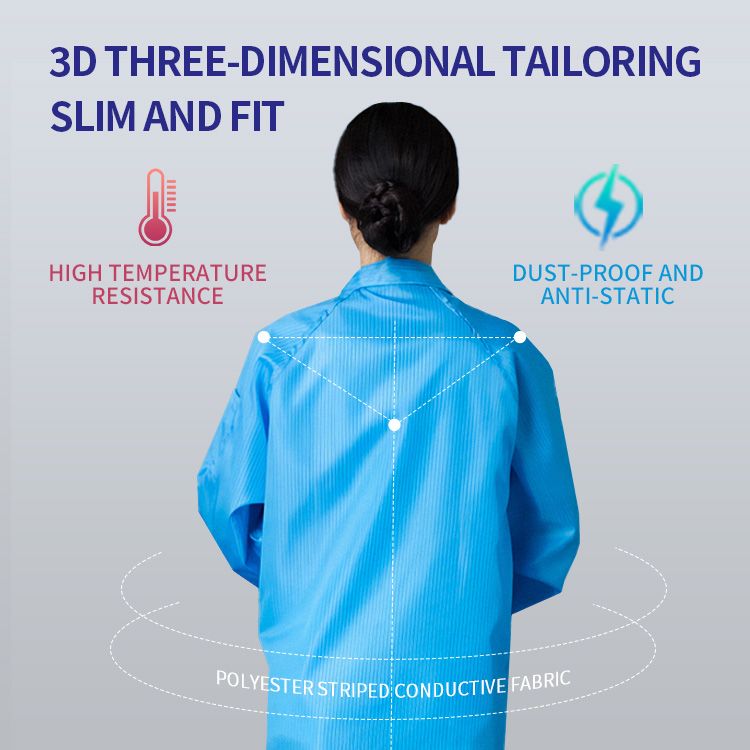
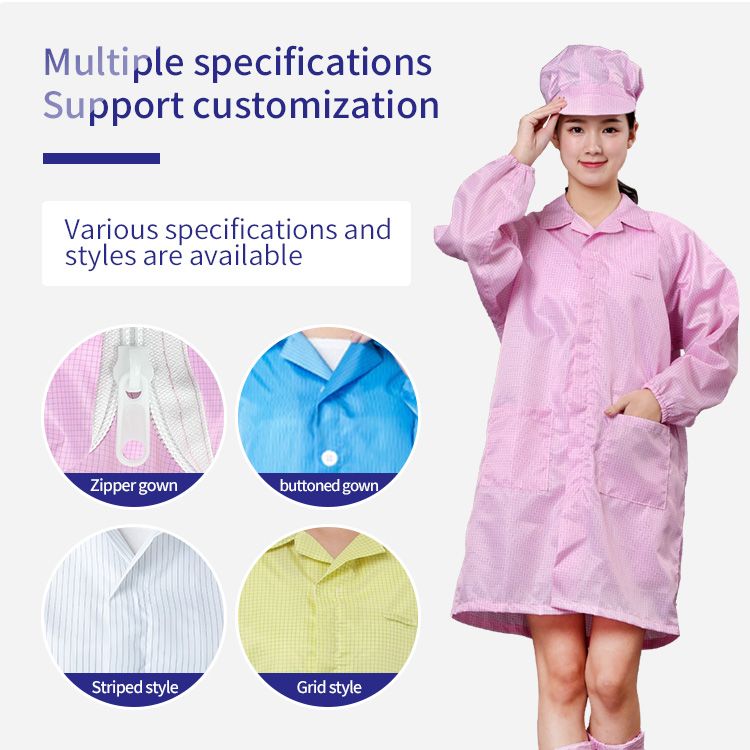
| Polyester-Cotton Blend with In-Woven Conductive Fibers | Base fabric of polyester-cotton with a grid of uniformly woven grey/white conductive fibers (carbon or metal-based). | General-purpose electronics manufacturing: consumer electronics assembly, automotive electronics, lithium battery production, optoelectronics (most ESD Protected Areas). | |
| Static-Dissipative Cleanroom Cotton | Fabric woven from blended yarns of cotton and conductive fibers, treated with soil-release finish. Combines cotton comfort with necessary static control and low linting. | Environments demanding high wearing comfort over long periods: prolonged assembly of precision instruments, certain pharmaceutical or food cleanrooms. |
Post-treatment management of antistatic clothing
Antistatic clothing is not a one-time investment in ordinary workwear, but a critical protective system requiring full lifecycle management. Its effectiveness depends not only on the initial selection but also on subsequent acceptance, use, maintenance, and supervision.

Professional Cleaning and Maintenance:
Antistatic clothing must be handled by qualified professional cleanroom cleaning services. They use deionized water and specialized detergents in a clean environment for cleaning, drying, and packaging to ensure thorough removal of contaminants, restore fabric resistivity, and control the amount of dust generated by the garment itself. This is fundamental to maintaining its cleanliness and antistatic performance.
Regular Performance Testing:
A regular testing system should be established, using a surface resistance tester to perform point-to-point or surface resistance tests on the clothing to ensure it consistently meets ESD standards (e.g., 10⁵ – 10⁹ Ω range). Clothing with degraded performance or damage must be immediately retired.
Proper Donning, Doffing, and Grounding Procedures:
All personnel must follow strict procedures for donning and doffing in designated changing areas. Ensure that the grounding strap/point on the clothing is reliably connected to the body via a wrist strap and ultimately connected to the workshop grounding system, forming a complete electrostatic discharge path.
Visual Management and Traceability: Establish a numbering system or use a color-coding system for each garment to track usage frequency, control cleaning cycles, and identify personnel in designated areas, improving management efficiency.