
3C Industry
Solution
High-Efficiency Cleaning Solutions for Mass-Production Electronics: Balancing Cost, Quality & Speed for Mobile Devices, Computers, Wearables & Smart Home Products
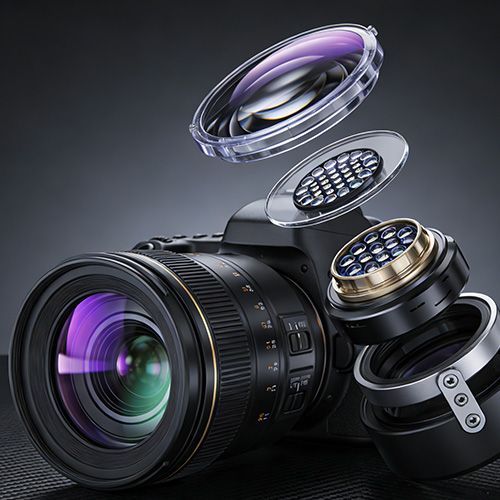
5/5
bupclean
One-stop industry service
15 years experience
3C Industry Cleaning Solutions Product Matrix
Your quick reference guide to matching process stages, surface types, and product tiers for optimal 3C cleaning performance.
| Process Stage | Surface Type | Contaminant & Cleaning Goal | Product Tier | Recommended Product | Key Features | Application Protocol |
|---|---|---|---|---|---|---|
| PCB Assembly | Specifically, PCBA Surface | For example, flux residues, solder balls, and dust require removal for electrical reliability | Therefore, Performance Tier | BN.11050135 (Low Residue) | First, certified low ionic/NVR levels are provided. Furthermore, low linting protects fine‑pitch components. Additionally, excellent solvent compatibility is offered | Consequently, use with flux remover or electronics‑grade IPA. Then, apply gentle pressure in one direction |
| In particular, Fingers/Connectors | For instance, oxidation, dust, and handling oils must be removed for signal integrity | Thus, Performance Tier | BN.11050805 (ESD Safe) | Moreover, conductive fibers prevent ESD damage. Also, these wipes are effective on gold‑plated contacts. In addition, controlled abrasiveness is provided | As a result, use it dry or with specialized contact cleaner. Furthermore, ground operator and equipment | |
| Enclosure Manufacturing | Typically, Metal/Glass Housings | For example, machining oils, dust, and handling marks require removal prior to bonding | Therefore, Value Tier | BN.11050207 (Balanced) | First, the wipes are soft enough for anodized aluminum. Additionally, they are effective on light oils. Consequently, an excellent cost‑performance ratio is achieved | Hence, use with fast‑drying, general‑purpose cleaner. Then, fold the wipe to expose a fresh surface |
| Specifically, Final Display/Glass | For instance, fingerprints, dust, and assembly residues must be removed for cosmetic perfection | Thus, Premium Tier | BN.11040324 (Ultra Soft) | Moreover, ultra‑soft and lowest‑lint options are provided. Furthermore, a streak‑free finish is guaranteed. Additionally, micro‑scratches are prevented | As a result, use a two‑wipe system: damp wipe in continuous motion, then immediately buff dry with a second wipe | |
| Final Assembly & Packaging | In particular, Camera Lens & Sensor | For example, microdust and fiber require removal without image artifacts | Therefore, Precision Tier | BN-SWAB-100 (Precision Swabs) | First, lint‑free precision tips are offered. Additionally, these swabs are designed for small apertures. Furthermore, ESD‑safe variants are available | Consequently, follow this protocol: 1. Inspect; then 2. Dry swab rotation; next 3. Solvent swab, finally 4. Final inspection |
| Typically, Finished Units | For instance, ambient dust and final handling marks require removal for OOBE (Out‑of‑Box Experience) | Therefore, Economy Tier | BN.11050201 (Lightweight) | Moreover, this is the most cost‑effective option for high volume. Additionally, reliable cosmetic cleaning is provided. Also, fast‑drying properties are offered | As a result, use for low‑risk surfaces. Furthermore, wipes can be pre‑moistened in automated dispensers | |
| Specifically, Rework/Repair Stations | For example, thermal paste, adhesives, and heavy soils require removal | Thus, Durable Tier | BN.11050312 (Heavy Duty) | First, high absorption for chemicals is provided. Furthermore, durable construction is offered. Additionally, these wipes are chemical‑resistant | Consequently, use with appropriate solvents. Then, discard immediately after heavy contamination | |
| In particular, Tools & Fixtures | For instance, grease, adhesive overspray, and general grime require removal | Therefore, Industrial Tier | BN.11050422 (Industrial) | Moreover, this is the most rugged option. Additionally, the wipes are chemical‑resistant. Also, they are reusable in some applications | Hence, use with industrial degreasers. Furthermore, wipes can be laundered in controlled environments |
More industry recommendations
Industry professionals widely use cleanroom wipes in semiconductor, optoelectronics, biopharma, medical devices, aerospace, EV batteries, and precision optics. These wipes offer low linting, high absorbency, solvent resistance, and ISO Class 5 compliance. Therefore, explore our selection guides and cleaning standards for each industry.
Company Partners





| Tier Level | Target Applications | Key Performance Indicators | Cost Position | Typical ROI |
|---|---|---|---|---|
| Premium Tier | Specifically, high‑visibility surfaces such as glass and high‑gloss coatings | First, scratch resistance exceeds 95%. Furthermore, the streak‑free rate reaches above 99%. Additionally, lint count stays below 5 fibers/cm² | Consequently, this tier commands a premium cost position, typically 15‑30% above standard | Nevertheless, manufacturers typically achieve ROI in 3‑6 months, mainly through reduced rework |
| Performance Tier | In particular, functional cleaning of PCBAs and connectors | For example, ionic residue remains below 0.1 ppm. Moreover, NVR measures less than 5 µg/cm². Also, we offer ESD protection as an option | Thus, the cost position stays moderate, about 5‑15% above standard | As a result, typical ROI falls between 2 and 4 months, driven by improved yield |
| Value Tier | Typically, general surfaces like housings and internal frames | For instance, cleaning efficiency exceeds 90%. Additionally, cost per unit stays below $0.01. Furthermore, these wipers show good compatibility with common solvents | Therefore, the cost position is competitive (at market average) | Hence, users can expect ROI in 1‑3 months, thanks to efficiency gains |
| Economy Tier | Mainly, high‑volume, low‑risk areas | Here, we prioritize cost optimization. Similarly, we focus on supply chain efficiency. Also, we require only minimum viable performance | Consequently, the cost position stays economical, typically 10‑20% below average | As a result, ROI becomes immediate, as users realize direct cost savings from the first use |
Reliable Guarantee Customer case feedback

4.9/5
Dr. Rachel Haldims
Solving a 5nm wafer defect problem
Surface charge decreased from 250V to <50V, and defect rate decreased from 12% to 1.8%.

5/5
Dr. Mariel Senry
Static electricity damage and lint can cause short circuits.
The electrostatic discharge (ESD) failure rate decreased from 8% to 0.6%, and the short circuit rate decreased from 5% to 0.3%.

4.8/5
Dr. Damian Pix
Optical equipment lens maintenance
No new scratches, charge maintained at <30V for over 8 hours, and imaging resolution improved by 15%.

4.5/5
Dr. Shi Yon
Wafer surface particulate contamination
The surface particulate contamination rate of wafers decreased by 70%, and the overall yield increased by 5%.
Ensuring Flawless Surfaces from Smartphones to Wearablescloth
In the 3C industry (computers, communications, and consumer electronics), even microscopic contaminants can cause device failure. Therefore, we provide 3C precision cleaning solutions for high‑volume manufacturing lines. Specifically, our cleaning systems remove particles, flux residues, and oils from PCBs, camera modules, display assemblies, and metal casings. Moreover, we design our equipment for inline integration with SMT lines, assembly robots, and testing stations. Furthermore, we optimize each process for speed and low operating cost. Consequently, our customers achieve higher first‑pass yields and fewer field returns. In fact, many leading electronics brands now rely on our technology. As a result, we have become a trusted partner in the 3C sector.
How do your cleaning systems remove flux residues from densely populated PCBs without damaging components?
To begin with, we use a combination of controlled spray‑in‑air and ultrasonic immersion technologies. Then, our engineers adjust nozzle angles and pressure for each board layout. Because of this, the cleaning fluid penetrates under low‑clearance components such as BGAs and QFNs. For example, we choose saponifiers or hydrocarbon solvents based on your flux type. After that, hot air knives dry the boards completely within seconds. Additionally, our systems maintain component temperatures below safe limits. Thus, sensitive parts remain unharmed throughout the process. Finally, you get clean, dry boards without any thermal or mechanical damage. In short, our approach delivers both effectiveness and safety.
We experience particle contamination on smartphone camera modules during assembly. How can you solve this problem?
First of all, we offer dedicated cleaning stations for camera modules before lens attachment and final sealing. Specifically, we use a gentle megasonic bath to dislodge particles as small as 0.3µm from the sensor surface. Next, we apply a non‑ionic surfactant rinse followed by DI water cascades. After that, we dry the modules using HEPA‑filtered nitrogen blow‑off. As a result, this process removes ≥99% of particles without leaving watermarks or static charges. Consequently, your modules pass dark field inspection. Moreover, they achieve higher image quality ratings. On top of that, we can adjust the process for different module sizes. Therefore, our solution directly improves your end‑product reliability. In other words, you reduce customer complaints about camera performance.
Can you customize cleaning solutions for different 3C products, such as foldable phone hinges or smartwatch cases?
Absolutely, we tailor every system to your specific product geometry and material. For instance, we design custom fixturing and spray manifolds for complex hinge assemblies. This ensures the cleaning fluid reaches internal crevices. Similarly, for aluminum or stainless steel watch cases, we adjust the pH and temperature of our cleaning chemistry. Thus, we prevent oxidation or discoloration effectively. In addition, we offer batch cleaning baskets for small parts. Likewise, we provide roller‑conveyor systems for high‑speed inline processing. On the other hand, we also support low‑volume, high‑mix production lines with flexible tooling. Furthermore, we include validation support, such as particle count testing and surface energy measurement. Finally, we document every parameter for your quality records. As a result, you receive a complete, customized solution that fits your production line perfectly. In conclusion, our 3C precision cleaning solutions (already mentioned once) adapt to any 3C application you have.
What is your quality assurance process, and can you support our audit and qualification requirements?
- Raw Material Control: Incoming fiber certification.
- In-process Checks: SPC (Statistical Process Control) on knitting, sewing, and cleaning.
- Final Batch Testing: Each batch is sampled and tested for particles, NVR, and ESD in our in-house lab. We provide full Certificate of Analysis (CoA) and Compliance (CoC).
We fully support customer audits (virtual or on-site) and provide all necessary documentation for your supplier qualification portal.