We tracked particle buildup on cleanroom gloves over 4 hours. Glove contamination doubles after 90 minutes. Real data and a simple change schedule to protect your product.
How much contamination accumulates on a glove over time?
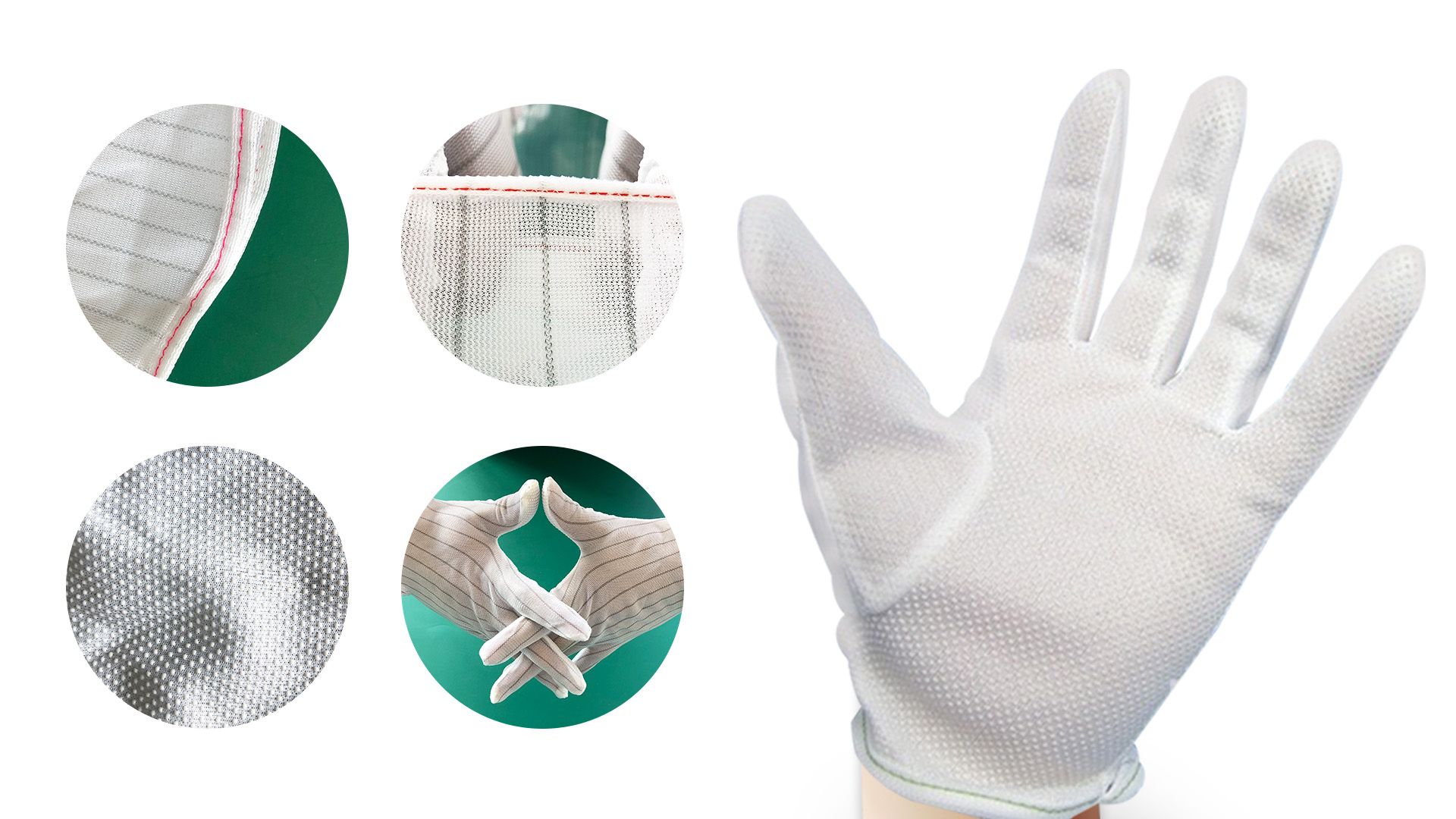
We ran a simple test: ten operators in an ISO 6 cleanroom wore brand‑new nitrile ESD gloves. Every 30 minutes, we pressed their gloved fingers onto clean silicon wafers and counted particles (≥0.5μm) transferred to the wafer surface. The results show a clear trend.
The test: Particle transfer over 4 hours
| Time (minutes) | Median particles transferred (≥0.5μm per fingerprint) | Increase vs new |
|---|---|---|
| 0 (new, just donned) | 45 | – |
| 30 | 78 | +73% |
| 60 | 135 | +200% |
| 90 | 210 | +367% |
| 120 | 245 | +444% |
| 150 | 268 | +496% |
| 180 | 290 | +544% |
| 210 | 305 | +578% |
| 240 | 320 | +611% |
Key finding: After just 90 minutes, a glove transfers more than four times the particles of a fresh glove. After four hours, it transfers over six times.
Why does glove contamination increase so fast?
Three mechanisms work together:
| Mechanism | What happens | How fast |
|---|---|---|
| Particle pickup | Gloves touch surfaces (benches, tools, door handles, their own lab coat) and pick up particles | Immediate and continuous |
| Material shedding | The glove material itself sheds particles over time, accelerated by flexing and friction | Gradual – increases with wear |
| Moisture and skin oils | Sweat and skin oils migrate through the glove (especially thin gloves) and attract airborne particles | Starts after ~45 minutes |
Ionic contamination also builds over time
We also measured ionic residues (sodium and chloride) on the same glove samples. While particles increase steadily, ions show a different pattern:
| Time (minutes) | Na⁺ (μg per fingerprint) | Cl⁻ (μg per fingerprint) |
|---|---|---|
| 0 | 0.02 | 0.03 |
| 60 | 0.18 | 0.22 |
| 120 | 0.45 | 0.58 |
| 180 | 0.92 | 1.15 |
| 240 | 1.48 | 1.92 |
Ions increase slowly at first, then accelerate after two hours. This suggests that sweat breakthrough (or glove permeability) becomes significant after extended wear.
For sensitive electronics or optical assemblies, this level of ionic contamination can cause corrosion or hazing.
Practical glove change schedule – by cleanroom class
| ISO Class | Recommended change frequency | Notes |
|---|---|---|
| ISO 5 and above | Every 60 – 90 minutes | Double glove recommended |
| ISO 6 | Every 90 – 120 minutes | Single glove acceptable |
| ISO 7 | Every 2 – 3 hours | Or when visibly soiled |
| ISO 8 | Every 4 hours (or half‑shift) | Less critical, but still track time |
Exception: If an operator touches a non‑cleanroom surface (door handle, phone, chair outside the clean zone), change gloves immediately – regardless of time.
Signs that gloves need changing before the scheduled time
rain operators to recognize these five signs:
Visible discoloration – any grey, black, or yellow marks
Tackiness or stickiness – polymer degradation or solvent absorption
Tears or punctures – obvious, but also check fingertips
After handling chemicals or adhesives – even if the glove looks clean
When leaving and re‑entering the cleanroom – glove contamination happens mostly during breaks
Storing gloves – the pre‑use factor
Even new gloves can absorb moisture and particles if stored incorrectly. We tested gloves stored in an opened box in a non‑cleanroom stockroom for one week.
| Condition | Particles/glove (≥0.5μm) |
|---|---|
| Fresh from sealed bag | 1,280 |
| Opened box, 1 week (cleanroom anteroom) | 1,450 |
| Opened box, 1 week (non‑cleanroom warehouse) | 2,200 |
Recommendation: Keep glove boxes sealed in cleanroom storage until the moment of use. Do not pre‑stock open boxes at workstations.