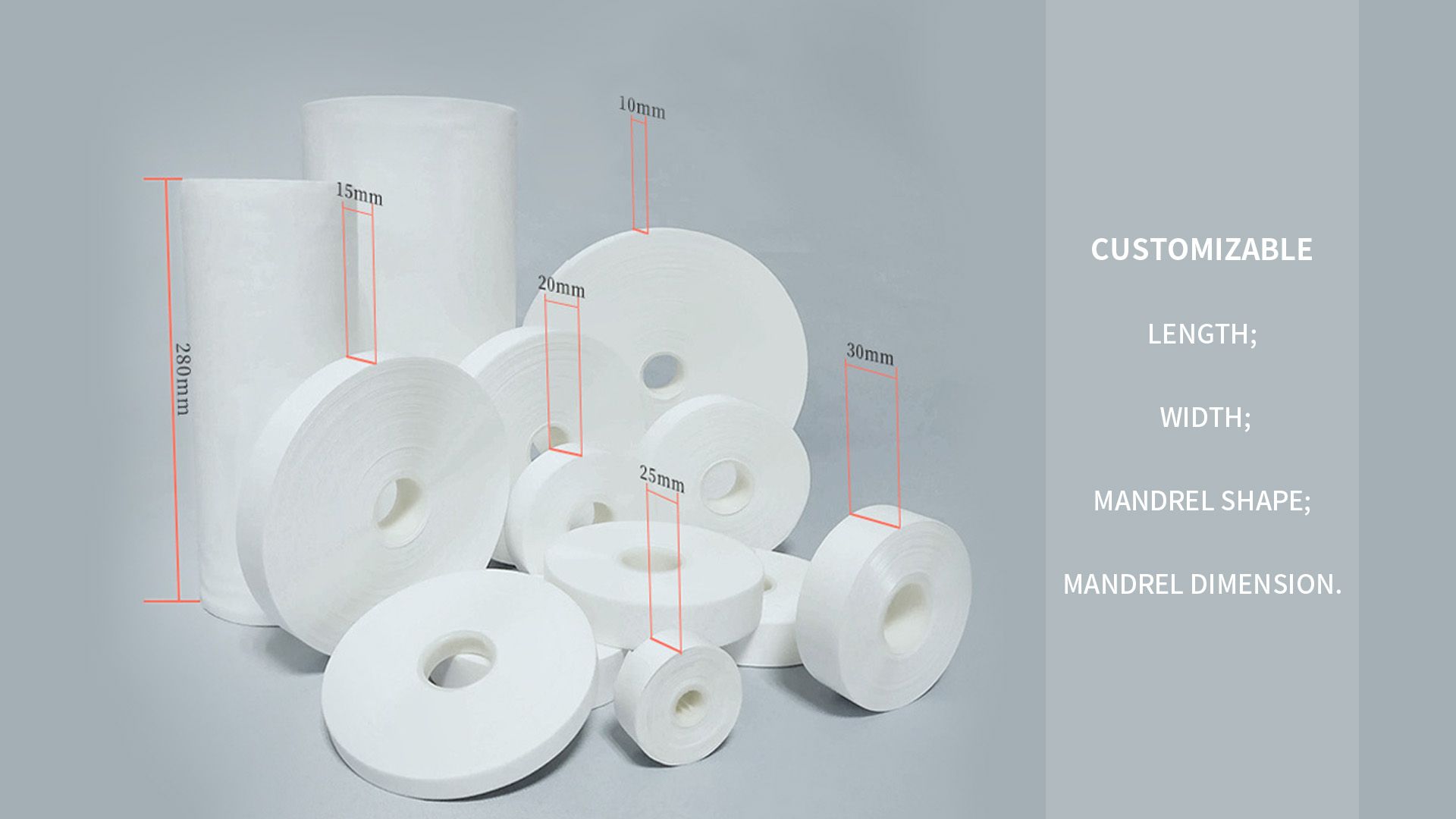
Length, width, mandrel shape, and mandrel dimension – four customizable parameters for cleanroom wiper rolls. Real data shows 30% waste reduction and lower cost per wipe.
The four customizable parameters – and why each matters
| Parameter | What it controls | Why it matters |
|---|---|---|
| Length | How many meters of wiper material on the roll | Determines change‑out frequency. Too short → frequent roll changes. Too long → roll may not fit your dispenser. |
| Width | How wide the wiper is (mm or inches) | Should match your cleaning tool or the part size. Too wide wastes material. Too narrow requires multiple passes. |
| Mandrel shape | Round, square, hexagonal, etc. | Must fit your roll dispenser or spindle. Wrong shape = roll does not turn or tears. |
| Mandrel dimension | Inner diameter (ID) of the core (mm/inches) | Must match your dispenser shaft. Too loose → roll spins freely. Too tight → cannot mount. |
Real waste reduction data
We tracked two electronics assembly lines for six months. Line A used standard pre‑cut wipers (9″×9″ sheets). Line B used a customizable wiper roll cut to 6″ width with a custom hex mandrel that fit their existing dispenser.
| Metric | Line A (standard sheets) | Line B (custom roll) | Difference |
|---|---|---|---|
| Wipes used per shift | 450 sheets | 310 sheet‑equivalents | -31% |
| Material waste (unused portion thrown away) | 22% | 8% | -64% |
| Annual wipe cost | $12,800 | $8,700 | -32% |
| Dispenser downtime (jams, misfeeds) | 15 min/week | 2 min/week | -87% |
Result: The custom roll paid for itself in material savings within three months.
How to determine your ideal roll specifications
Step 1 – Measure your dispenser or spindle
Inner diameter of the core (mandrel dimension) – typically 1.5″, 2″, 3″, or 4″
Mandrel shape – round is standard, but some dispensers use square or hex
Maximum roll length that fits in your dispenser
Step 2 – Observe your cleaning task
What is the typical area you wipe? Measure it.
A 6″ width works for most PCB and panel cleaning. For narrow channels, 2″ or 3″ may be better.
For large surfaces (e.g., laminar flow hoods), 12″ width speeds up cleaning.
Step 3 – Calculate optimal sheet length
If you tear off pieces by hand, determine the average length used per wipe. A roll with perforated breaks every 4″ to 8″ is common. Avoid rolls where operators tear off two or three times more than needed.
Step 4 – Test a sample roll
Order a small custom roll with your selected parameters. Run it on your line for one week. Measure:
How many wipes per roll?
Any dispensing issues?
Operator feedback on size and ease of use?
Cleanroom considerations for custom rolls
When customizing a wiper roll, do not compromise cleanroom performance. Verify with your supplier:
Particle shedding – Same as sheet wipers. ≤300 particles/m² for ISO 5.
NVR – ≤0.1 mg/cm². Roll wipers can have higher NVR if adhesive is used to bond layers. Ask for solvent‑bonded or thermal‑bonded rolls.
Edge sealing – Roll wipers are often die‑cut, which leaves unsealed edges. For ISO 5+, specify laser or ultrasonic cut edges even on rolls.
Packaging – Rolls should be vacuum‑sealed in cleanroom bags, not just shrink‑wrapped.