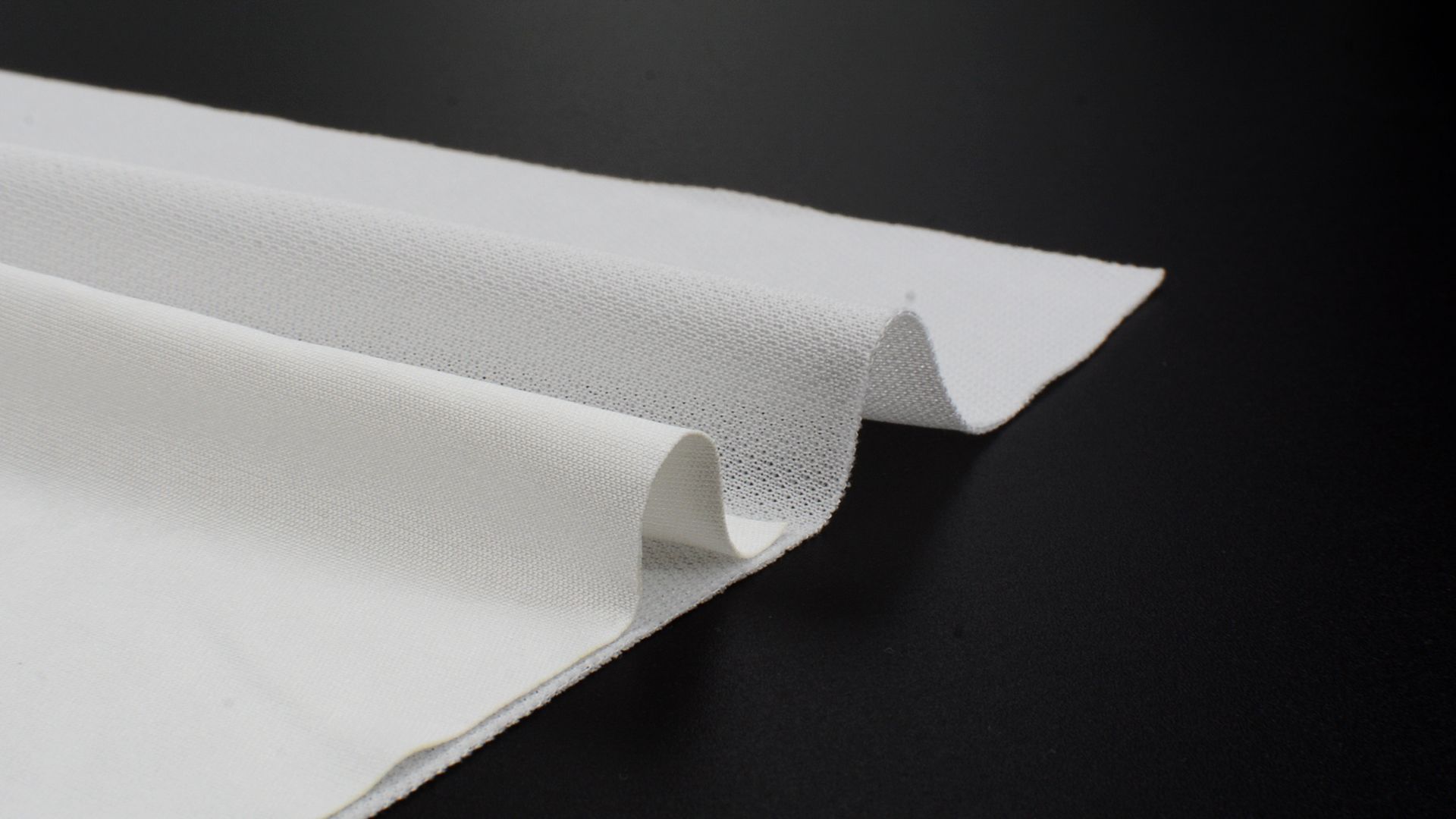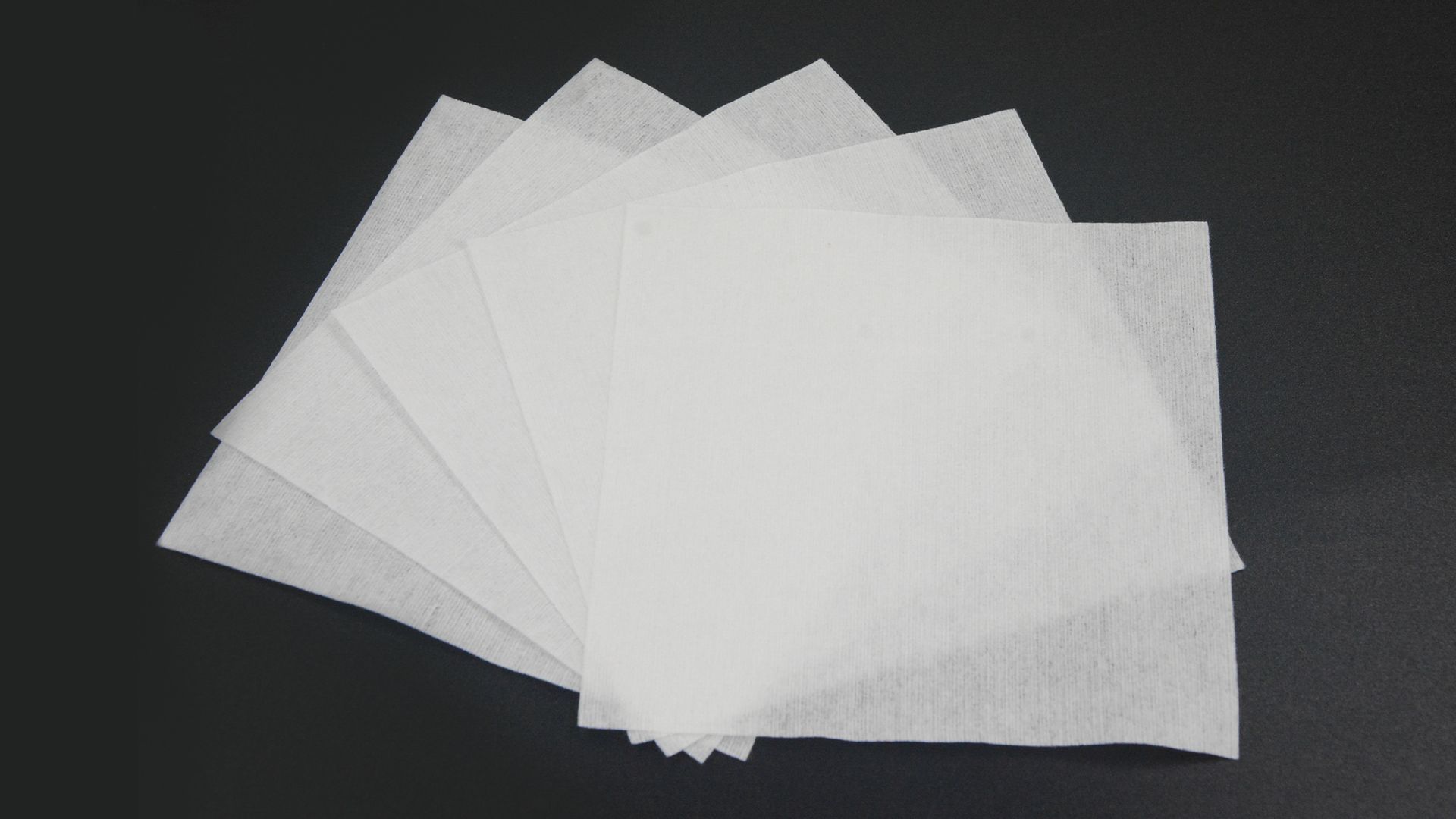
Many cleanrooms keep two wipe grades: one for critical surfaces, one for everything else. The cost difference can be large. But overspecifying for noncritical areas wastes money. Under‑specifying for critical areas causes defects. We built a decision matrix based on real fab data.
Product pair comparison – four models
| Property | Microfiber A | Microfiber B | Polyester C | Polyester D |
|---|---|---|---|---|
| Part number | BN.11050107 | BN.11040301 | BN.11020203 | BN.11020504 |
| Grammage | 180 g/m² | 110 g/m² | 120 g/m² | 120 g/m² |
| Edge | ultrasonic | laser | cold‑cut | cold‑cut |
| Material | 75/25 | 75/25 | 100% poly | 100% poly |
| Pack size | 400 | 400 | 600 | 100 |
| Cost per sheet | $0.038 | $0.045 | $0.011 | $0.0095 |
| Particles (±0.5 µm) | ≤6 /cm² | ≤3 /cm² | 18‑22 /cm² | 18‑22 /cm² |
| Absorption (IPA) | 3.1× | 2.8× | 1.7× | 1.6× |
| Tensile strength | 34 N/cm | 30 N/cm | 25 N/cm | 26 N/cm |
Decision flow
Question 1 – Does the surface-touch product (wafer, lens, or display)?
Yes → Go to Question 2.
No (tool exteriors, floors, racks) → Use polyester (C or D). Save 60‑75% of the cost.
Question 2 – Is the cleanroom class ISO 5 or better?
Yes → Use sub‑micron microfiber B (BN.11040301). Particle spec is critical.
No → Use ultra‑fine microfiber A (BN.11050107)—cheaper than B and still low‑lint.
Cost calculation – real fab example
A 200 mm wafer fab has four zones:
Zone 1 (photolithography, ISO 4): uses 2,000 wipes/month.
Zone 2 (etch, ISO 5): 3,000 wipes/month.
Zone 3 (metrology, ISO 6): 4,000 wipes/month.
Zone 4 (equipment exteriors, ISO 7): 10,000 wipes/month.
Option X (over‑specify all with microfiber B):
(2,000+3,000+4,000+10,000) × 0.045=19,000×0.045=∗∗0.045=19,000×0.045=∗∗855/month**
Option Y (match grade to need):
Zone 1: 2,000 × 0.045 = $90
Zone 2: 3,000 × 0.038 = $114
Zone 3: 4,000 × 0.011 = $44
Zone 4: 10,000 × 0.0095 = 95. Total = ∗∗95 Total = ∗∗343/month**
Annual savings = (855 – 855 – 343) × 12 = $6,144—enough to buy a small particle counter.
Performance trade‑offs
Polyester wipes (cold‑cut) are fine for stainless steel, anodized aluminum, and epoxy floors. But do not use them on:
Antireflective coated glass – scratches appear after 10 strokes.
Photomasks – particles will print.
Soft metals (copper, gold)—the 100% polyester fiber is harder than the nylon blend and leaves micro‑scratches.
Microfiber wipes (BN.11050107) can be washed up to 30 times if you need reusable wipes for rough cleaning. Polyester cold‑cut wipes delaminate after 8‑10 washes—not cost‑effective to reuse.