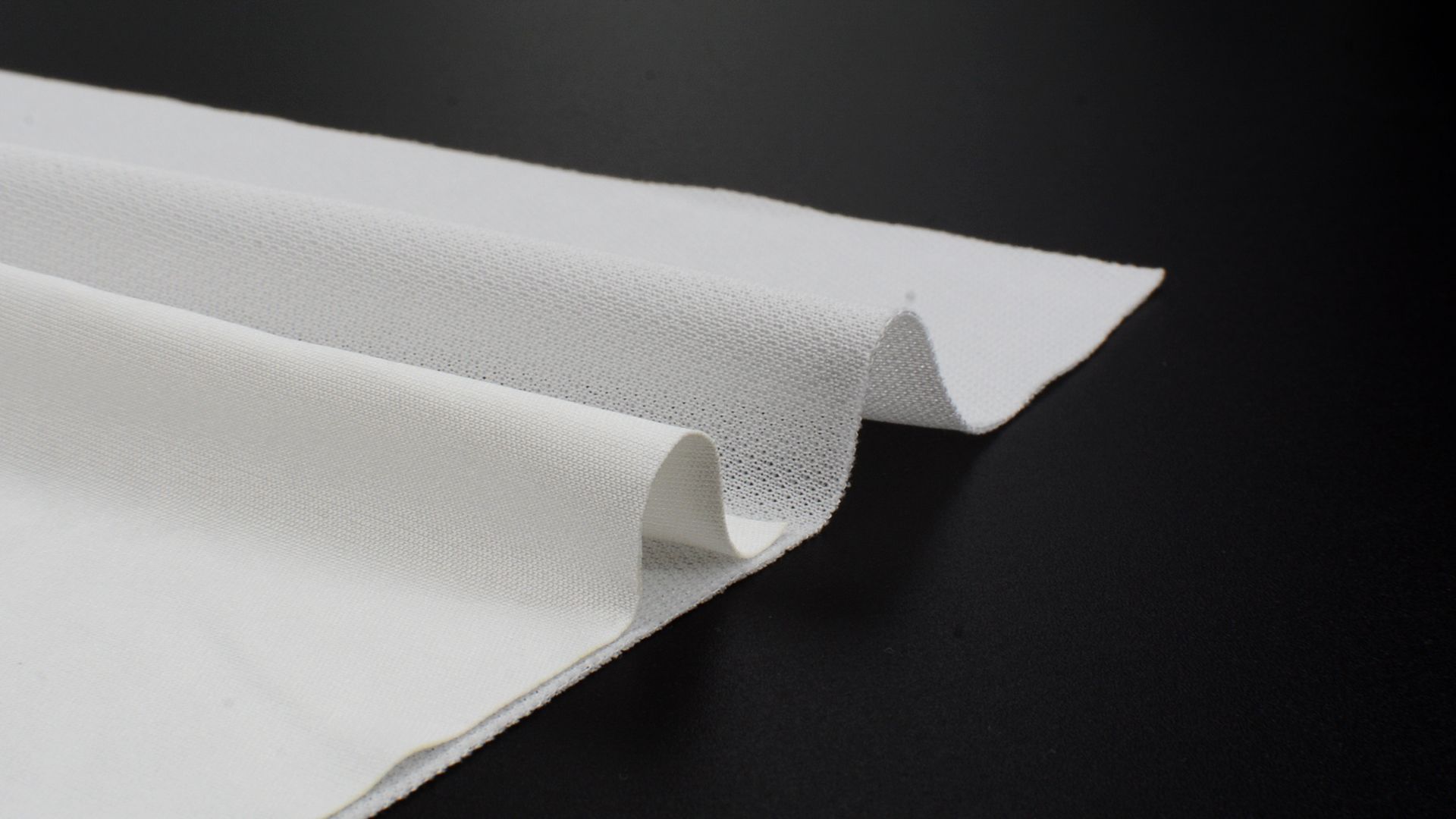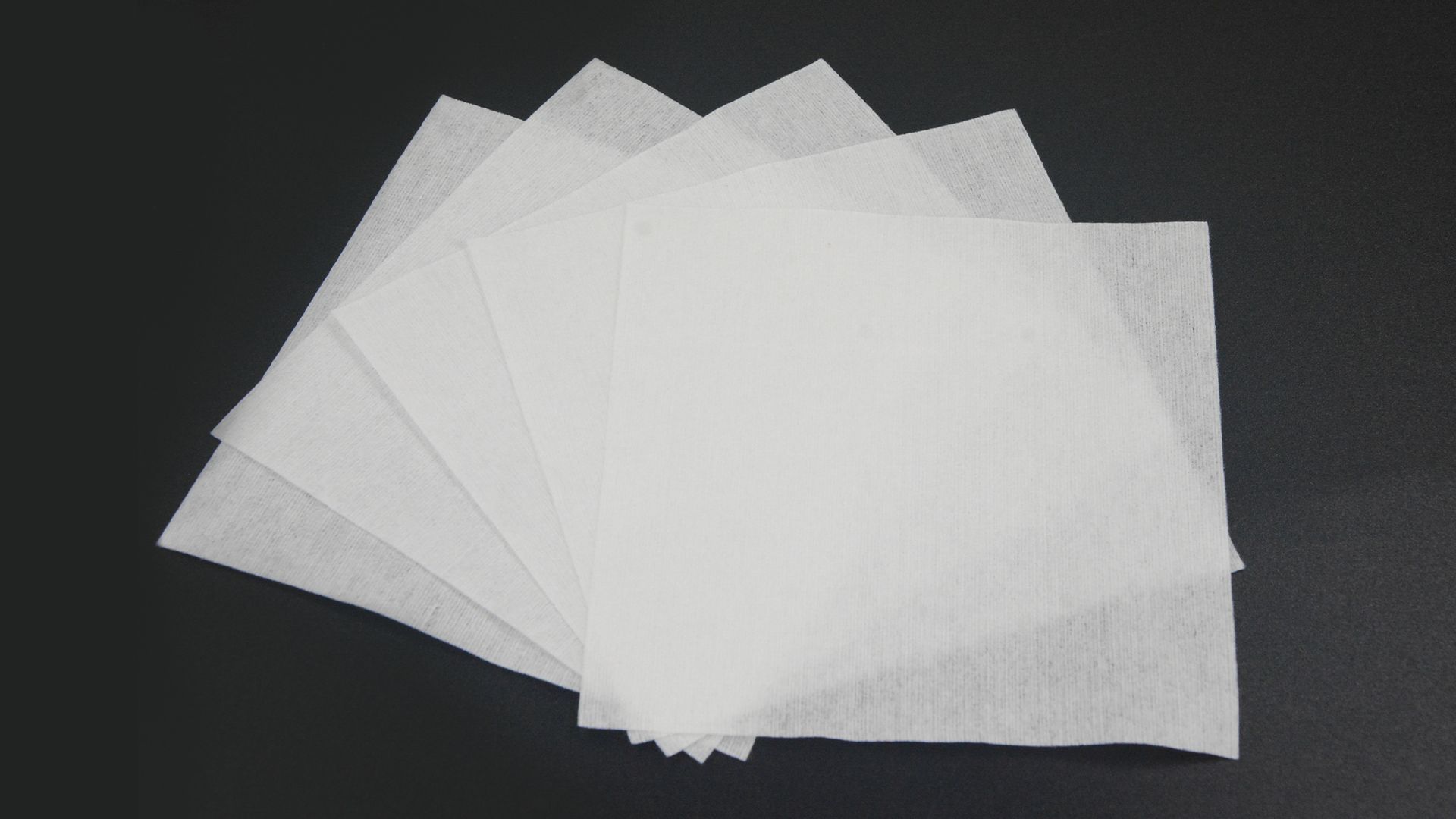
In electronics manufacturing, semiconductor packaging, optical lens cleaning, and laboratory cleanrooms, wipes are one of the most basic consumables – and also one of the easiest to get wrong. Buying a cheap pack often leaves lint all over the surface. Buying an expensive one doesn’t always tell you what you are paying for. Below we break down four key parameters with real data to help you select the right wipe.
1. Start with GSM: What is the difference between 55g, 68g and 70g?
GSM (grams per square metre) determines the wipe’s thickness, absorbency and durability. Heavier is not always better – it depends on your application.
53–55g (lightweight) : Common in 4×4 inch and 6×6 inch sheet formats, 300–1200 sheets per pack. Ideal for cleaning IC pins, PCB solder joints, optical lenses and other small precision parts. Absorbency approx. 260–280%. Best for fine cleaning under a microscope, lens cleaning.
68–70g (medium weight) : Common in 25×38cm roll format, 500 sheets per roll. Absorbency ≥300%, high wet strength – retains ≥85% tensile strength after soaking in alcohol. Best for PCB board cleaning, SMT stencil wiping, oil and grease removal.
Above 100g (heavy weight) : Used for industrial equipment maintenance and heavy oil cleaning. Rarely used in standard cleanrooms.
Industry test standards generally require water absorption ≥400 g/m² to ensure cleaning efficiency. If your wipe absorbs noticeably less, the GSM may not meet specifications.
Selection tip : For precision optics and chip pins, choose 53–55g. For PCB assembly and daily lab work, choose 68–70g.
2. Particle shedding: How the IEST-RP-CC004.4 test works
The wipe itself must not become a source of contamination. The international standard is IEST-RP-CC004.4, which includes three test methods:
Liquid Particle Count (LPC) : The wipe is orbitally shaken in ultrapure water and particles 0.5–20 µm are measured with a liquid particle counter. Results are expressed as number of particles ≥0.5 µm per unit area.
Fiber analysis : Optical microscopy detects large fibres (>100 µm) remaining after orbital shaking, preventing macroscopic fibres from clogging device orifices.
Airborne Particle Count (APC) : A Helmke drum simulates dry‑state movement of the wipe while an airborne particle counter monitors release of particles 0.3–10 µm.
Typical pass criteria :
| Parameter | Class 100 cleanroom | Class 1000 cleanroom |
|---|---|---|
| Particle release ≥0.5µm | ≤1000 particles/m² | ≤2000 particles/m² |
| Fibre loss (mass loss after 500g friction, 100 cycles) | <0.03% | <0.05% |
| Applicable standard | FZ/T 64056-2015 (≤300 particles/m³ for Class 100) | IEST-RP-CC004.4 |
Standard FZ/T 64056-2015 clearly states that in a Class 100 (ISO 5) cleanroom, wipe particle release must be ≤300 particles/m³ (≥0.5 µm).
3. Material comparison: Polyester vs. Polypropylene
Each material has its strengths – there is no “best”, only “most suitable”.
100% Polyester : Highest absorbency (≥300%), resistant to alcohol, IPA, acetone, moderate cost. Ideal for optical lenses, PCB cleaning, daily lab work. Edge sealing options: laser, ultrasonic, or cold cut. Laser/ultrasonic sealing significantly reduces fibre release.
100% Polypropylene (PP) : Excellent resistance to strong acids, alkalis and aggressive chemicals, but lower water absorbency than polyester. Suitable for pharmaceutical and chemical plants using aggressive solvents.
Wood pulp/polyester composite (airlaid) : Highest absorbency (≥350%), but lower cleanliness and prone to linting. Suitable for one‑time absorption of large liquid volumes; not recommended for high‑grade cleanrooms.
Selection tip : For standard cleanrooms, choose polyester. For aggressive chemicals, choose PP. For large‑volume absorption, wood‑pulp composite can be used but be aware of linting risk.
4. Three often overlooked parameters: NVR, ion content and edge seal
NVR (Non‑Volatile Residue) : The residue left after solvent extraction and evaporation. IEST-RP-CC004.4 specifies short‑term extraction with deionised water and IPA to measure residue mass, preventing deposition of oils, polymers and other non‑volatile contaminants on sensitive surfaces. Electronics industry standard SJ/T 11480-2014 requires NVR ≤0.1 mg/cm². For precision metal surfaces or optics, the lower the NVR the better.
Ion content (IC test) : Ion chromatography measures sodium, potassium, chloride and other ions. Active ions can corrode precision metal surfaces through electrochemical reactions. Semiconductor‑grade wipes require chloride ≤0.5 ppm. If you are cleaning gold fingers or BGA pads, ion content must be strictly controlled.
Edge seal : Cold cut is cheapest but edges fray and shed fibres – suitable only for Class 100,000 or lower. Heat cut is slightly better but still has shedding risk. Laser and ultrasonic sealing are the best – the edges melt and solidify, eliminating shedding. For Class 1000 and above, choose only laser‑ or ultrasonic‑sealed wipes.
| Application | Recommended GSM | Material | Edge seal | Key parameter |
|---|---|---|---|---|
| Optical lens cleaning | 53–55g | Polyester | Laser | Particle shedding ≤1000/m² |
| PCB assembly / flux removal | 68–70g | Polyester | Laser/ultrasonic | Absorbency ≥300%, NVR ≤0.1 mg/cm² |
| Semiconductor IC pins | 53–55g | Polyester | Laser | Chloride ≤0.5 ppm |
| Pharma / aggressive chemicals | 70g | PP | Ultrasonic | Chemical resistance, bioburden control |
| Daily lab work | 55–68g | Polyester | Heat/laser | Absorbency ≥280%, particles ≤2000/m² |
When buying, ask the supplier for three test reports : IEST-RP-CC004.4 particle shedding, ion chromatography and NVR. All three together make a complete wipe quality package.