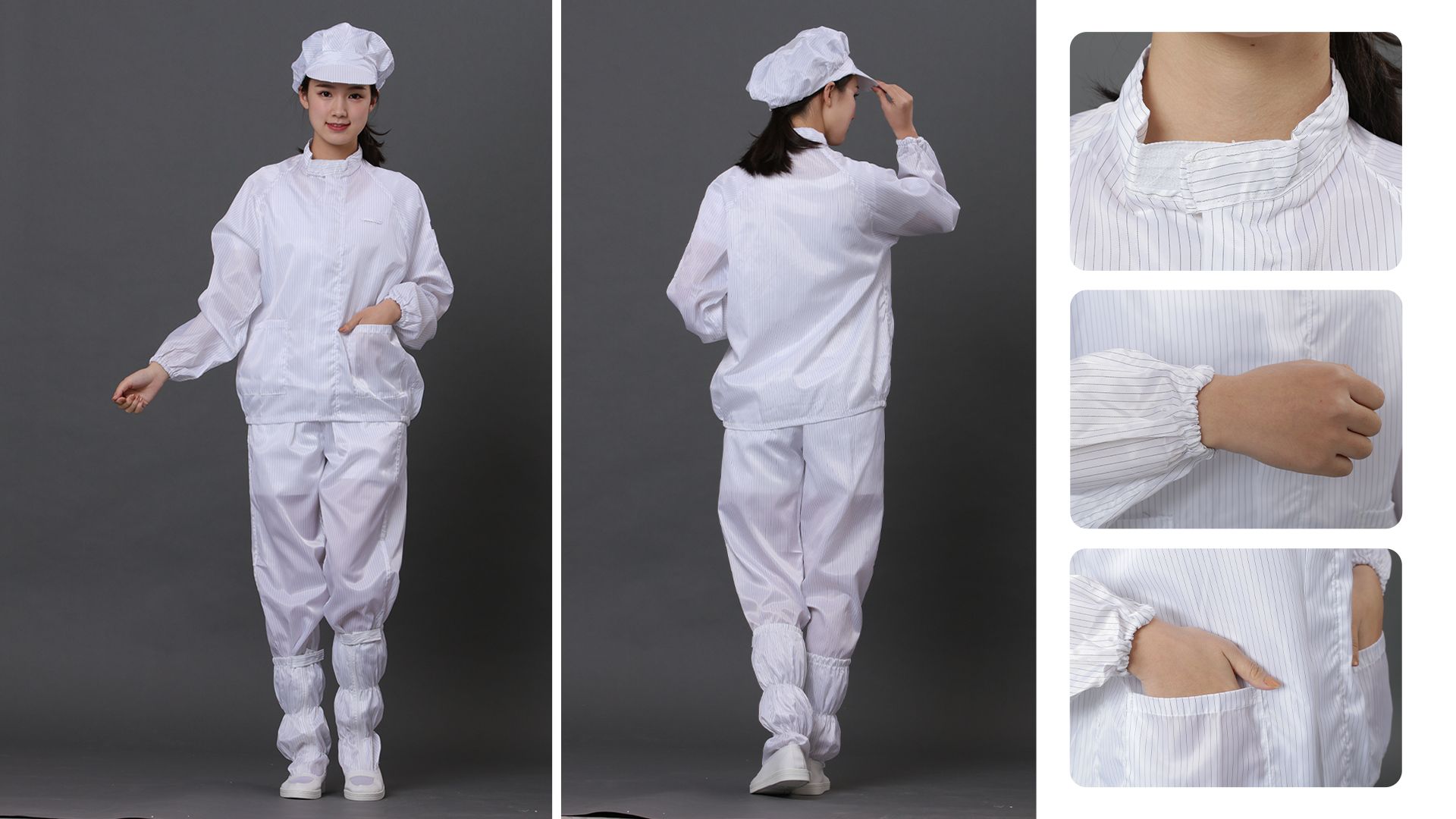
If you are buying ESD clothing for a cleanroom or electronics assembly line, you have probably seen two names on every spec sheet: ESD S20.20 and IEC 61340. Most buyers assume these are interchangeable. They are not — and choosing the wrong standard can void your electrostatic discharge control programme entirely. This guide breaks down exactly what each standard demands, how ESD clothing must perform to comply, and which certified garments actually pass the test.
What Is ESD Clothing and Why Standards Matter
ESD clothing — also called cleanroom garments or anti-static workwear — forms the final barrier between a person’s body charge and sensitive components. Without compliant garments, a technician walking across an ESD floor can still discharge hundreds of volts at a PCB through an untreated sleeve or collar gap. Standards exist to define measurable limits so that buyers, auditors, and manufacturers share one testable language.
Two frameworks dominate global procurement:
- ANSI/ESD S20.20 — the American standard published by the ESD Association, mandatory for US defence contractors and widely adopted in Asia-Pacific electronics factories.
- IEC 61340-5-1 — the international standard published by the International Electrotechnical Commission, required for ISO-certified facilities in Europe and increasingly specified in semiconductor supply chains worldwide.
ESD Clothing: Core Definitions and Application Domains
Under both frameworks, ESD protective clothing refers to garments — typically smocks, coveralls, or lab coats — constructed with conductive or dissipative fibres woven into the base fabric. The garment is intended to:
- Shield the person’s inner clothing (which may be heavily charged) from the work environment.
- Provide a controlled path for static charge to dissipate to ground through wrist straps, ESD flooring, or footwear.
- Prevent tribocharging between the garment surface and handled components.
Key application domains include:
- Semiconductor wafer fabrication (ISO Class 1–5 cleanrooms)
- PCB assembly and SMT reflow lines
- Medical device manufacturing under ISO 13485
- Aerospace electronics under MIL-STD-461
- Data centre hardware handling and server room maintenance
S20.20 vs IEC 61340-5-1: Side-by-Side Comparison
| Criterion | ANSI/ESD S20.20 | IEC 61340-5-1 |
|---|---|---|
| Governing body | ESD Association (USA) | IEC TC101 (International) |
| Garment resistance limit | Point-to-point: <1×10¹¹ Ω | Surface resistance: <1×10¹¹ Ω |
| Body voltage limit | <100 V (walking test) | <100 V (walking test) |
| Test method for garment | ESD STM2.1 (horizontal) | IEC 61340-4-9 (vertical probe) |
| Certification requirement | Programme-level certification (facility) | Product-level compliance + facility |
| Periodic re-qualification | Audited every 2–3 years | Annual product test recommended |
| Typical market | North America, Japan, Taiwan, China | EU, Germany, South Korea, India |
The resistance thresholds align closely, but the test geometry differs. IEC 61340-4-9 uses vertical probes that replicate how a sleeve hangs during assembly — a stricter positional requirement that some garments fail even when they pass S20.20’s horizontal measurement.
3 Things to Check Before You Order ESD Clothing
Compliant ESD clothing does not start with a certificate — it starts with the fabric construction, the seam finishing, and the chest strap system. Here is the three-factor checklist used by cleanroom procurement managers at tier-1 semiconductor factories.
1. Fabric Construction: Grid Pitch and Fibre Type
The conductive grid woven into ESD fabric is the single most important variable. Two key specifications govern compliance:
- Grid pitch: The spacing between conductive yarns. A 5 mm pitch gives surface resistance in the 10⁶–10⁸ Ω range; a 10 mm pitch typically sits at 10⁸–10¹⁰ Ω. For cleanrooms handling devices with withstand voltages below 100 V, specify 5 mm or tighter.
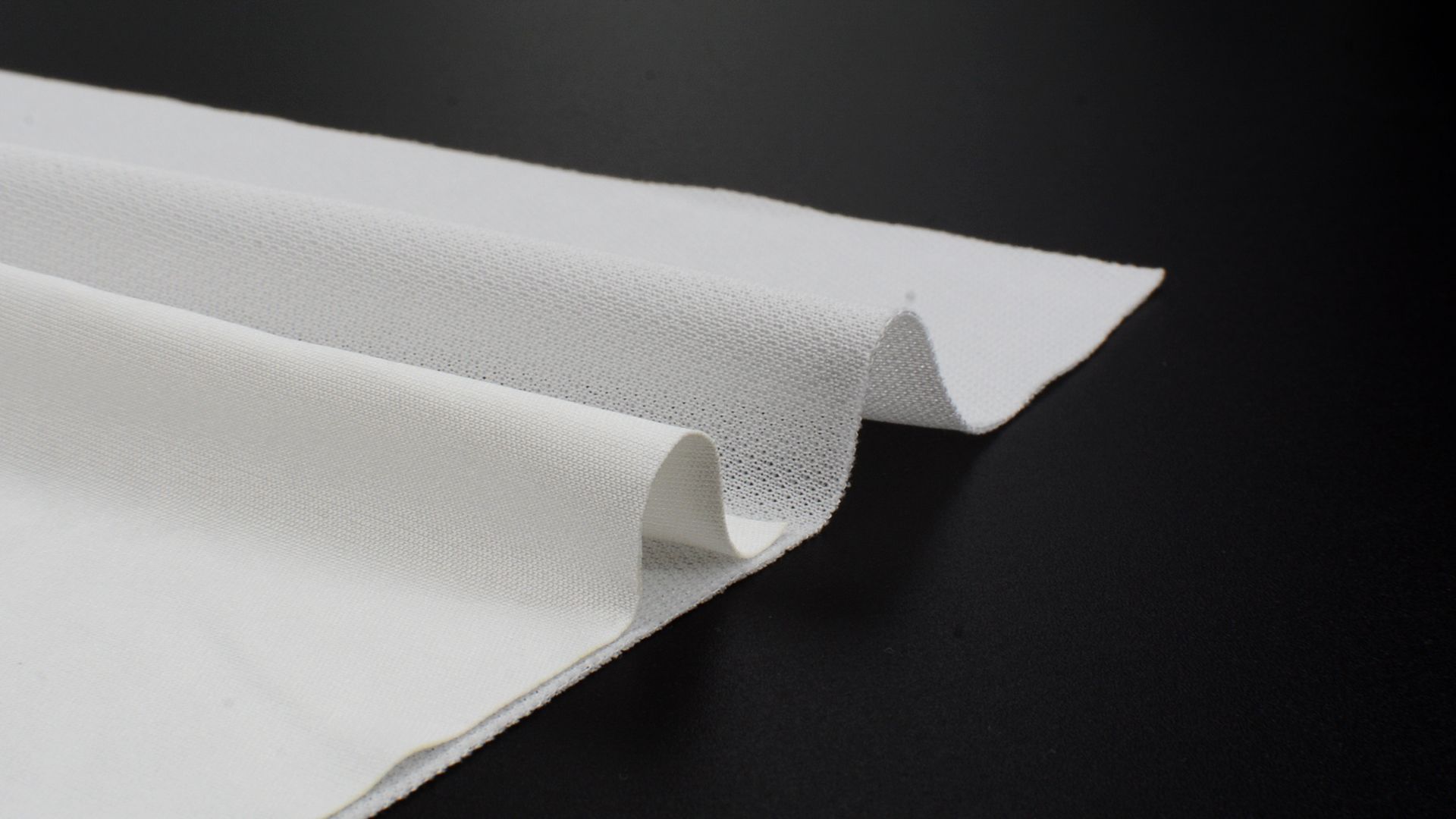
- Fibre type: Carbon-core polyester (the most common), stainless steel interwoven with polyester, and PTFE-blend fabrics each have different particle shedding rates. Carbon-core polyester offers the best balance of conductivity and low particle generation for ISO Class 5–7 environments.
| Fabric Type | Typical Resistance (Ω) | Particle Generation | Best For |
|---|---|---|---|
| Carbon-core polyester 5 mm grid | 10⁶ – 10⁸ | Low | ISO Class 5–7, SMT lines |
| Stainless steel interwoven | 10⁴ – 10⁶ | Very low | ISO Class 3–5, wafer fab |
| PTFE anti-static blend | 10⁸ – 10¹⁰ | Moderate | Chemical handling, splash zones |
Recommendation: For most cleanroom garments used in electronics manufacturing, specify carbon-core polyester with a 5 mm pitch. Request the fabric’s surface resistance test certificate — not just the finished garment certificate — before ordering in bulk.
2. Seam and Collar Finishing: Where Most Garments Fail Audit
A garment can have a perfectly compliant fabric panel and still fail a body voltage test because of an untreated collar edge or a polyester elastic cuff that tribocharges against bare skin. The following construction details are non-negotiable for S20.20 and IEC 61340 compliance:
- Chest strap with elastic cuff: An ESD smock with a chest strap connects the garment to the wearer’s wrist strap system, ensuring the charge path is complete. The elastic cuff at the wrist must be made from ESD-compliant elastic — plain polyester elastic is a common failure point. Specify “ESD smock with chest strap elastic cuff” explicitly in your RFQ.
- Collar closure: Open-neck smocks allow inner clothing to tribocharge freely. Specify a snap-close or hook-and-loop ESD collar that overlaps by at least 25 mm.
- Seam construction: Overlock seams with polyester thread break the conductive grid. Specify flatlock or ESD-thread overlock to maintain grid continuity across panels.
- Pocket panels: Pockets lined with non-ESD fabric are a common audit failure. Either eliminate pockets or specify full ESD lining.
Red flag: If a supplier quotes cleanroom clothing wholesale at an unusually low price, ask specifically about cuff elastic composition and seam thread type. Budget garments routinely fail at these two points.
3. Matching Garment Specification to Cleanroom Class and ESDS Sensitivity
Not every clean zone needs the same level of ESD protection. Over-specifying wastes budget; under-specifying voids your EPA (ESD Protected Area) programme. Use this decision matrix:
| Environment | ESDS Sensitivity (HBM) | Required Body Voltage | Recommended Garment Class |
|---|---|---|---|
| ISO Class 7–8 electronics assembly | ≥250 V HBM | <100 V | ESD smock, 5 mm grid, open cuff permitted |
| ISO Class 5–6 semiconductor packaging | ≥100 V HBM | <50 V | Full coverall, 5 mm grid, chest strap mandatory |
| ISO Class 3–4 wafer fab / advanced node | <100 V HBM (CDM critical) | <20 V | Stainless steel coverall, hood, booties, gloves |
For ESD clothing for semiconductor cleanroom environments at ISO Class 5 and above, body voltage below 50 V is the practical target even though both standards allow 100 V — because fast-moving automated handling amplifies transient peaks beyond the nominal walking-test value.
One common misconception: lightweight ESD smocks marketed as “suitable for all cleanroom classes” are rarely tested above Class 7. Verify test conditions on the certificate — a garment tested at 40–60 % relative humidity will perform significantly worse in a dry winter environment at 20–30 % RH.
Frequently Asked Questions About ESD Clothing Standards
Does ESD S20.20 certification cover the garment itself, or only the facility programme?
S20.20 certification is a facility programme certification — it confirms that your ESD control plan, equipment, and procedures meet the standard as a system. The garment itself does not carry an S20.20 “product certificate.” Instead, garment compliance is verified through the ESD STM2.1 resistance test, which the supplier should provide as a third-party test report. When sourcing from a ESD clothing manufacturer, always request the STM2.1 test report for the specific fabric lot, not just a generic company certification.
Can a regular cleanroom smock be used as ESD clothing if it is made from polyester?
No. A standard cleanroom smock made from plain polyester is one of the worst possible materials in an EPA — polyester tribocharges heavily and can generate body voltages above 5,000 V. “Cleanroom compatible” and “ESD compliant” are entirely separate qualifications. A garment must contain conductive or dissipative fibres in a verified grid pattern and be tested per ESD STM2.1 or IEC 61340-4-9 to qualify as ESD protective clothing. Always verify both the cleanroom particle rating and the ESD resistance test result on the same datasheet.
Ready to Source Certified ESD Clothing for Your Cleanroom?
Whether you need ESD smocks for a small PCB repair bench or full coveralls for a semiconductor ISO Class 5 suite, the compliance path is the same: verify fabric resistance, confirm chest strap and cuff construction, and match the specification to your actual ESDS sensitivity level. Our cleanroom garments are tested to both ESD S20.20 and IEC 61340-5-1 and come with full third-party test documentation. Browse ESD clothing options here or contact our technical team for a specification review before your next bulk order.
Conclusion
Choosing the right ESD clothing is not simply a matter of picking the cheapest smock with “anti-static” on the label. ESD S20.20 and IEC 61340-5-1 define specific resistance limits, body voltage thresholds, and test methodologies — and a garment that passes one test geometry may fail another. Focus on three controllable variables: fabric grid pitch and fibre type, seam and cuff construction details (especially the chest strap elastic cuff), and the match between garment specification and your actual cleanroom class and component sensitivity. Get those three right, and your ESD clothing will protect both your products and your audit results.