Every year, electrostatic discharge (ESD) causes billions of dollars in damage to sensitive electronics — and in many cases, the source is something as simple as the wrong footwear. If you work in a cleanroom, semiconductor fab, or any environment where ESD control matters, choosing the right anti static shoes is not optional. In this guide, you’ll learn exactly what to look for, how materials and sole types affect performance, and which ESD safety shoes are right for your specific application.
Part 1: What Are Anti Static Shoes and Why Do They Matter?
Core Definition: Anti Static Shoes vs. ESD Safety Shoes
Anti static shoes (also called ESD footwear or electrostatic dissipative shoes) are designed to safely channel static electricity from the body to the ground, preventing charge buildup that can damage electronic components or trigger ignition in flammable environments. The key technical term is “electrostatic dissipative” — meaning electrical resistance falls within the range of 106 to 109 ohms (per ANSI/ESD S20.20 and IEC 61340 standards).
Common application areas include:
- Semiconductor and PCB manufacturing
- Pharmaceutical and medical device cleanrooms
- Electronics assembly lines
- Data centers and server rooms
- Explosive or flammable material handling
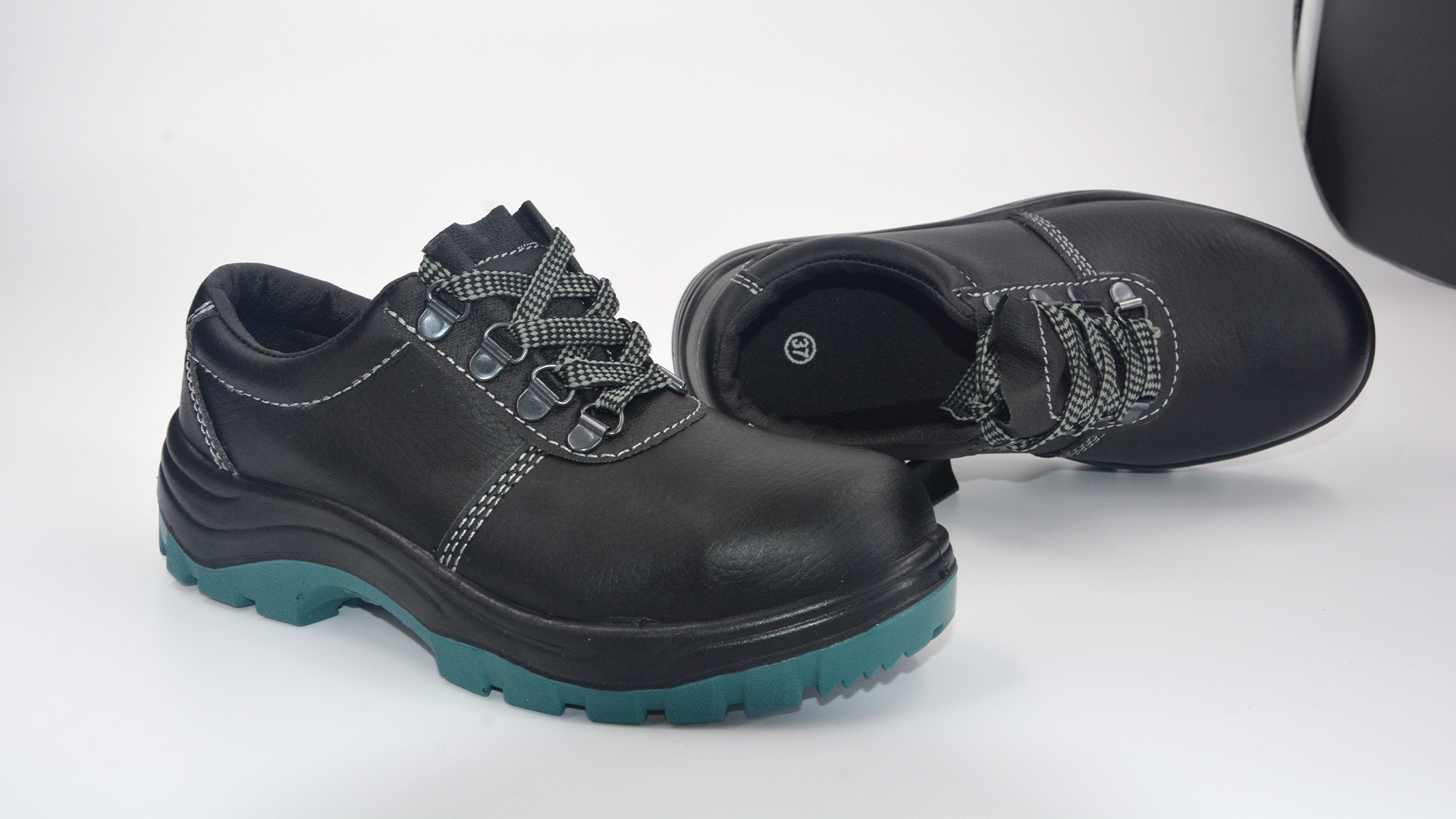
Compared to regular safety shoes, ESD safety shoes feature conductive or dissipative outsoles, often combined with toe protection and slip resistance — making them a workplace safety essential, not just a preference.
Why Standard Safety Shoes Are Not Enough: 4 Key Differences
Many buyers assume any safety shoe will handle ESD — this is a costly misconception. Here’s how anti static shoes compare to standard footwear:
| Feature | Standard Safety Shoes | Anti Static / ESD Shoes |
|---|---|---|
| ESD resistance range | No specification | 10⁶ – 10⁹ Ω (dissipative) |
| Static buildup protection | None | Yes — dissipates charge to ground |
| Cleanroom compatibility | Rarely rated | Available for ISO Class 3–8 |
| Compliance certifications | EN ISO 20345 (basic) | EN 61340-5-1, ANSI ESD S20.20 |
| Sole material | Standard rubber/PU | Conductive/dissipative PU or rubber |
The bottom line: if you are working in an ESD-controlled area, standard safety shoes will not meet compliance requirements — and can actually make you the largest source of static in the room.
Part 2: How to Choose Anti Static Shoes — Core Parameters
Choosing the right ESD footwear comes down to three core decisions: material, sole construction, and cleanroom classification. Here’s a step-by-step breakdown so you select with confidence.
Step 1: Choose the Right Upper Material
The upper material affects comfort, durability, chemical resistance, and cleanroom particle generation. Here are the main categories:
Leather
Best for: General manufacturing, electronics assembly, non-cleanroom ESD environments.
Pros: Durable, breathable, long service life.
Cons: Not ideal for ISO Class 5 and above; may shed particles over time.
Recommended: Where durability outweighs cleanliness requirements.
Microfiber / PU Synthetic
Best for: Cleanrooms ISO Class 6–8, pharmaceutical labs.
Pros: Low particle generation, easy to wipe clean, lightweight.
Cons: Less breathable than leather.
Recommended: Mid-level cleanroom environments where cost efficiency matters.
Anti-static Fabric / Knit Upper
Best for: anti static shoes for cleanroom class 100 (ISO Class 5), semiconductor fabs.
Pros: Minimal particle shedding, comfortable for long shifts.
Cons: Less abrasion-resistant; shorter lifespan in heavy-duty use.
Recommended: Highest-grade cleanroom applications.
Not recommended for ESD environments: standard canvas, non-coated suede, or any material with metal eyelets that are not grounded.
Step 2: Evaluate the Sole Type — This Is Where ESD Performance Lives
The outsole is the most critical component of any ESD safety shoe. It determines both electrical performance and physical durability. Here’s how to compare:
Conductive Sole (resistance < 105 Ω)
Used when rapid, continuous discharge is required — typically in explosive environments. Not recommended for standard electronic manufacturing as too-fast discharge can itself damage sensitive components.
Electrostatic Dissipative (ESD) Sole (106 – 109 Ω) — Most Common
The standard for electronics and cleanroom use. Provides controlled charge dissipation without risk of damage. Look for ESD shoes with steel toe cap that combine this sole type with ANSI/EN toe protection — the most versatile configuration for industrial ESD environments.
Slip-Resistant PU Sole
Many modern ESD shoes steel toe cap slip resistant PU sole designs combine ESD dissipation with oil and water resistance. PU (polyurethane) is the preferred material for most cleanroom and lab settings due to its low particle generation and easy-clean surface. If your floor is epoxy, tile, or sealed concrete, prioritize SRC-rated slip resistance (tested on both ceramic tile and steel).
Steel Toe ESD Shoes
For environments requiring both ESD control and impact protection (ISO 20345 Class S1/S2/S3), steel toe ESD shoes are the standard. The steel toe cap must be electrically isolated from the dissipative outsole path — a design detail to verify with your supplier before purchase. Composite toe caps (fiberglass or carbon fiber) are lighter and do not interfere with ESD paths, making them a strong alternative.
Quick comparison:
| Sole Type | Resistance Range | Best Application |
|---|---|---|
| Conductive | < 10⁵ Ω | Explosive environments |
| ESD Dissipative | 10⁶ – 10⁹ Ω | Electronics, cleanrooms, PCB assembly |
| Anti-static (general) | 10⁵ – 10⁹ Ω | Light industrial, non-ESD critical zones |
Step 3: Match Cleanroom Classification to Shoe Specification
Not all anti static shoes are cleanroom-rated, and this distinction matters enormously. A shoe certified for ISO Class 7 (Class 10,000) will not pass contamination audits in an ISO Class 5 (Class 100) environment.
Use this guidance for cleanroom selection:
ISO Class 8 / Class 100,000: Standard ESD shoes with wipeable uppers are typically sufficient. Focus on ESD compliance and slip resistance.
ISO Class 7 / Class 10,000: Require low-lint uppers (microfiber or coated synthetic), sealed seams, and no exposed laces if possible. ESD certification is mandatory.
ISO Class 6 / Class 1,000 and below: Dedicated cleanroom ESD shoes with particle generation data (typically < 1,000 particles/ft³ at 0.5μm). Shoe covers (ESD shoe cover) are often used over ESD shoes in transition zones to prevent cross-contamination between areas.
ISO Class 5 / Class 100 (semiconductor, pharma): Only shoes with validated cleanroom certifications, low-outgassing materials, and full ESD compliance should be used. This is where anti static shoes for cleanroom class 100 specifications are directly referenced in procurement documents. Always request the particle generation test report from the manufacturer.
Common misconception: “Any shoe can be made cleanroom-compatible with an ESD shoe cover.” This is partially true for transition zones, but for ISO Class 5 and above, the base shoe must also meet cleanroom standards — the cover alone is insufficient during full-shift operations.
Part 3: Frequently Asked Questions
How do I test if my anti static shoes are still working?
Use an ESD shoe tester resistance meter foot grounder — a dedicated device that measures the resistance from your body through the shoe to ground. Most ESD shoe testers provide a pass/fail result in under 3 seconds. The pass range is typically 750kΩ to 35MΩ (per ANSI ESD S20.20). Best practice: test shoes at the beginning of each shift, especially in Class 100 cleanrooms or mission-critical electronics lines. Shoe testers should themselves be calibrated annually. Replace shoes if they consistently fail even after cleaning the sole — ESD performance degrades with sole wear.
Can I use ESD shoe covers instead of ESD shoes — what’s the difference?
An ESD shoe cover (also called an ESD bootie or foot cover) is a disposable or reusable cover worn over regular shoes to temporarily provide ESD protection. They are ideal for visitors, infrequent cleanroom access, or transition zones. However, they have three key limitations compared to dedicated ESD shoes: (1) inconsistent contact with the floor, especially on irregular surfaces; (2) they wear through quickly, losing ESD continuity mid-shift; (3) they do not provide the toe protection, ergonomic support, or long-term comfort of purpose-built shoes. For full-time workers in ESD-controlled environments, purpose-built ESD shoes are always the correct choice. Use shoe covers as a supplement — not a substitute.
If your team is evaluating ESD footwear for daily production use, explore our range of steel toe ESD shoes and ESD shoes with steel toe cap designed for industrial cleanroom environments — built to EN 61340 and ISO 20345 dual certification.
Choosing the right anti static shoes protects your products, your workers, and your compliance standing. Start with the application — cleanroom class, floor type, and hazard level — then match material, sole, and certification. When in doubt, test with a certified ESD shoe tester resistance meter foot grounder and review your supplier’s particle generation and resistance data before committing to a bulk order.