What Is a Sticky Mat and How Does It Actually Work
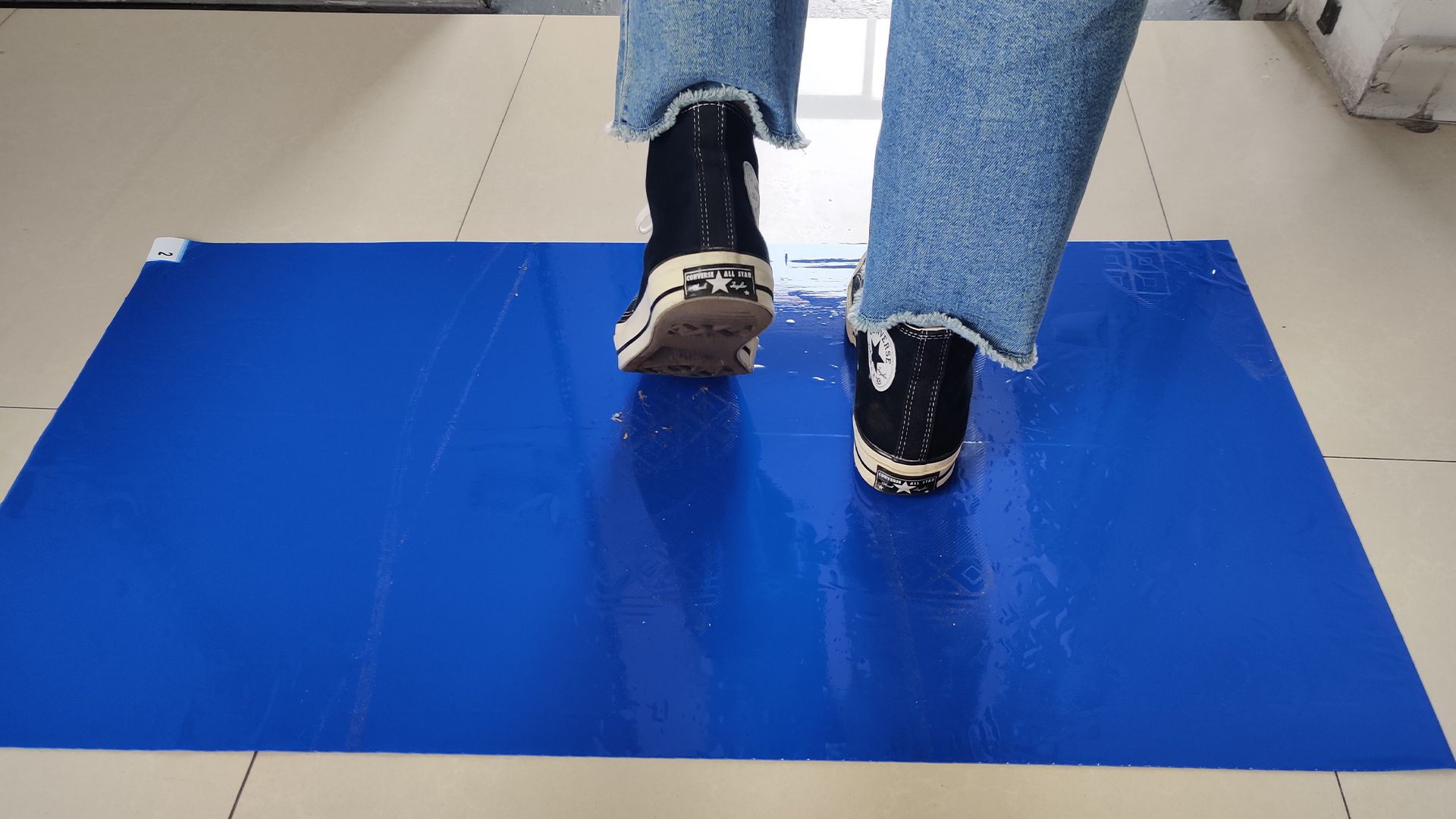
A sticky mat (also called a tacky mat, cleanroom mat, or adhesive floor mat) is a multi‑layer floor covering made from polyethylene film coated with a pressure‑sensitive adhesive. Each layer is numbered, typically 30 or 60 sheets per book, allowing users to track usage and peel off contaminated layers.
The operating principle is straightforward: when a person steps on the mat, the adhesive lifts dust, dirt, and particles off the shoe sole. When the top layer becomes contaminated, you peel it off to expose a fresh, clean layer underneath.
But “straightforward” does not mean “simple.” The effectiveness of a sticky mat depends on three critical factors: the adhesive quality, the layer count, and the replacement cadence. Get any of these wrong, and your mat becomes a decoration rather than a barrier.
Understanding the cleanroom sticky mat step capacity is essential for maintaining proper contamination control.
The Data: How Effective Is a Sticky Mat Really
Independent testing has shown that sticky mats can remove up to 98.6% of viable microbes from cart wheels and significantly reduce particle ingress from footwear.
Studies measuring air cleanliness and particle deposition rates before and after installing tacky mats have demonstrated “high improvement” in both metrics. The benefit is particularly pronounced for particles ≥5μm and larger.
However – and this is important – particle removal efficiency declines rapidly as the layer becomes loaded with contamination. A fresh layer may remove 90‑95% of particles. A layer that has been walked on 300 times may remove less than 70%.
The critical question is not whether sticky mats work. They do. The question is: how do you know when a layer is no longer working?
Layer Lifespan: The 150‑200 Step Rule
Most cleanroom operators peel a layer when it looks dirty. This is the most common and most costly mistake.
By the time a layer looks visibly dirty, particle removal efficiency has already dropped well below acceptable levels. A better approach is to track the number of steps, not the visual appearance. This is where understanding the cleanroom sticky mat step capacity becomes critical.
Each layer can effectively capture particles for approximately 150 to 200 steps. After 200 steps, removal efficiency drops below 85%. After 300 steps, it drops below 80%. At 400 steps, the layer has effectively failed, removing less than 70% of particles.
What does this mean in practice?
| Daily entries | Daily steps | Layers needed per day | 30‑layer book lasts | 60‑layer book lasts |
|---|---|---|---|---|
| 50 | 100 | 0.5 | 60 days | 120 days |
| 100 | 200 | 1.0 | 30 days | 60 days |
| 200 | 400 | 2.0 | 15 days | 30 days |
| 300 | 600 | 3.0 | 10 days | 20 days |
| 500 | 1000 | 5.0 | 6 days | 12 days |
For a typical cleanroom with 200‑300 daily entries, a 30‑layer book lasts 10‑15 days. A 60‑layer book doubles that to 20‑30 days. The choice between 30 and 60 layers is not about quality – it is about balancing replacement frequency against material cost.
The Hidden Cost of Peeling Too Late
Here is what happens when you peel a layer too late.
First, particles accumulate on the adhesive surface. As the surface becomes saturated, the adhesive can no longer capture new particles. Instead, previously captured particles may be re‑suspended and transferred to shoes.
Second, the accumulation of dirt and debris creates a physical barrier between the adhesive and new contaminants. The mat becomes a dirt transfer surface rather than a dirt capture surface.
Third, and most critically: particles that bypass a saturated sticky mat enter your cleanroom. In an ISO 5 cleanroom, a single particle larger than 0.5μm on a wafer surface can cause a fatal defect. The cost of that defect – rework, scrap, or field failure – far exceeds the cost of peeling a layer 50 steps earlier.
A semiconductor assembly plant we worked with was peeling layers only once per day despite 400 daily entries. Each layer was being walked on over 600 times. Particle removal efficiency had dropped to 64%. After switching to a 200‑step peel cadence, their defect rate dropped by 60%.
Installation: The Foundation of Effective Contamination Control
A sticky mat is only as good as its installation. Improper installation is the second most common failure mode. Following a proper sticky mat installation guide is the foundation of effective contamination control.
The floor must be clean, dry, and free of wax or oil. A mat installed on a dirty or damp floor will not adhere properly. When you try to peel a layer, the entire mat lifts up rather than peeling layer by layer.
The surface must be flat. Uneven floors create air pockets under the mat. These pockets cause the mat to lift at the edges, allowing particles to bypass the adhesive entirely.
The mat must be pressed firmly from center to edges. This removes air bubbles and ensures full adhesive contact with the floor.
Allow 30 minutes of settling time before heavy traffic. The adhesive needs time to bond with the floor surface.
If the mat lifts at the edges, use double‑sided ESD tape at the corners to secure it. Do not install mats on freshly waxed, wet, or heavily textured floors.
Storage and Shelf Life: The Overlooked Factor
Sticky mats have a shelf life. Unopened mats stored at 15‑30°C and below 70% relative humidity last approximately 24 months.
Once opened, a book of mats should be used within 6 months. The adhesive degrades over time, especially when exposed to heat, humidity, or direct sunlight.
Store mats flat, not on edge, to prevent warping. Keep them away from heat sources and direct sunlight. In high‑temperature environments (>35°C), the adhesive may soften and bleed. In low‑temperature environments (<10°C), the adhesive becomes stiff and less effective.
The 30‑Layer vs 60‑Layer Decision
One of the most common questions we hear is: should I buy 30‑layer or 60‑layer mats?
The answer depends entirely on your traffic volume and your tolerance for replacement labor. Making the right sticky mat layer count selection requires careful analysis of your daily traffic.
30‑layer mats are lighter, easier to handle, and cheaper per book. They are ideal for low‑traffic areas (<150 entries per day) or for facilities that prefer to change mats frequently.
60‑layer mats are heavier and more expensive per book but require half the replacement frequency. They are ideal for high‑traffic areas (>300 entries per day) where the labor cost of frequent mat changes exceeds the material cost difference.
For most medium‑sized cleanrooms with 200‑300 daily entries, a 30‑layer book provides a good balance. For high‑traffic areas with 500+ entries, a 60‑layer book reduces change frequency and labor cost.