One Real Test Data What a Good Sticky Mat Can Do
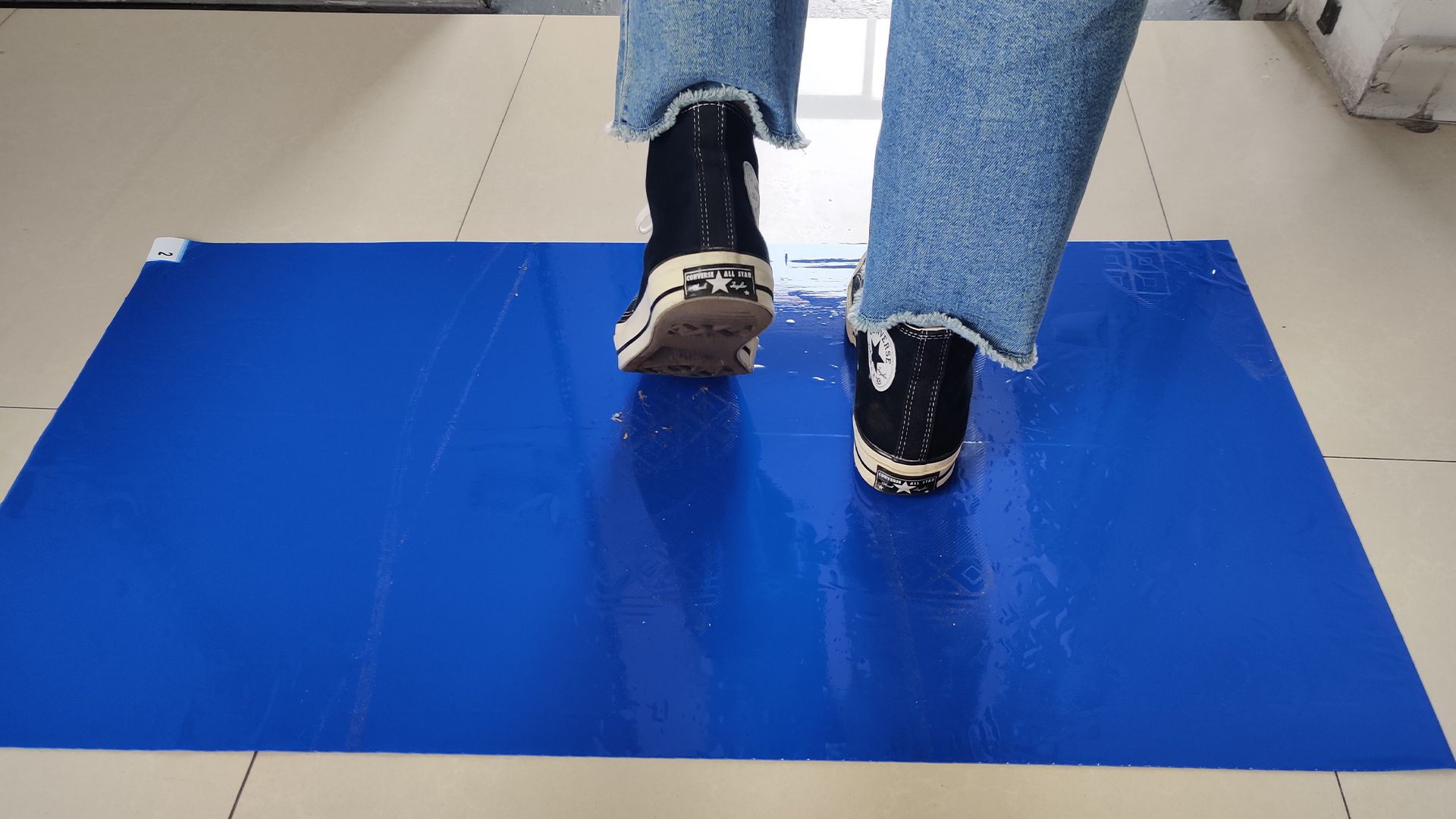
We tested a standard high tack sticky mat (30 layers blue white alternating 18 by 36 inches). We simulated normal walking and measured particle removal efficiency for particles 5 microns and larger every 50 steps.
| Steps on same layer | Particle removal efficiency | Status |
|---|---|---|
| 0 fresh layer | 96 percent | Excellent |
| 50 steps | 94 percent | Good |
| 100 steps | 91 percent | Good |
| 150 steps | 88 percent | Acceptable |
| 200 steps | 85 percent | Critical |
| 250 steps | 81 percent | Peel recommended |
| 300 steps | 77 percent | Must peel |
| 400 steps | 68 percent | Failed |
Key findings:
The optimal life of each sticky mat layer is 150 to 200 steps
Above 250 steps removal efficiency drops below 80 percent
A 30 layer sticky mat book can handle about 4500 to 6000 total steps
With 300 entries per day one book lasts about 15 to 20 days
Two Three Common Mistakes When Using Sticky Mats
Mistake 1 Waiting until the layer looks completely dirty
Many operators think the layer is still usable if it does not look fully covered with footprints. But test data tells us that when you can clearly see dirt removal efficiency is often already below 80 percent. The correct rule is peel when visible dirt covers more than 30 percent of the surface.
Mistake 2 Installing on waxed or wet floors
The bottom adhesive of a sticky mat needs direct contact with a clean dry floor. If the floor has been freshly waxed or has oil or water the adhesive will not bond properly. When you try to peel the top layer the whole mat lifts up instead of peeling layer by layer.
Mistake 3 Using ordinary floor mats instead of sticky mats
Ordinary absorbent mats or rubber mats have no adhesive ability. They can only scrape off large particles. Fine dust remains on shoe soles and is carried into the cleanroom. A sticky mat uses pressure sensitive adhesive not physical scraping.
Three Correct Installation Steps
Step 1 Clean the floor thoroughly. Remove dust oil and wax. Ensure the floor is completely dry.
Step 2 Remove the backing liner from the bottom of the sticky mat.
Step 3 Place the mat on the floor adhesive side down. Press from the center to the edges to remove air bubbles.
Step 4 Use a roller or heavy object to press down the edges for 30 minutes.
Step 5 Peel off the top protective sheet. The sticky mat is ready.
If the edges lift use double sided ESD tape at the corners.
Four How to Determine Change Frequency Based on Foot Traffic
Count how many people enter the cleanroom each day. Then calculate based on 150 to 200 steps per layer.
| Daily entries | Daily steps (2 steps per person) | Layers to peel per day | 30 layer book lasts |
|---|---|---|---|
| 50 people | 100 steps | 0.6 layer | About 50 days |
| 100 people | 200 steps | 1.2 layers | About 25 days |
| 200 people | 400 steps | 2.4 layers | About 12.5 days |
| 300 people | 600 steps | 3.6 layers | About 8.3 days |
| 500 people | 1000 steps | 6 layers | About 5 days |
If your sticky mat book lasts longer than the table shows you may not be peeling often enough. If it lasts much less you may be peeling too early and wasting sheets.
Five A Real Case
A PCBA factory SMT line had 1.2 percent soldering defects per month. Failure analysis found tiny particle residue on solder pads. Investigation showed the sticky mat at the entrance was peeled only once every three days. Daily foot traffic was about 400 steps. The top layer had been stepped on over 600 times. Particle removal efficiency had dropped to 64 percent.
Corrective actions:
Change to peeling every half day about 200 steps per layer
Post a sign at the sticky mat saying peel when visible dirt covers more than 30 percent
Replace the entire book weekly
Within two months soldering defects dropped to 0.3 percent.
Six Summary
A sticky mat is not a decoration. It is a data driven tool at the cleanroom entrance. A good sticky mat tells you when to peel and when to replace based on real numbers not guesswork.
Three rules to remember:
Each layer lasts about 150 to 200 steps not until it looks dirty
The floor must be clean dry and wax free before installation
Calculate change frequency based on foot traffic not on feeling
Next time you walk into a cleanroom look down at the sticky mat. When was the last layer peeled If you cannot answer change your process today.