The test: 25 wash cycles, three laundry methods
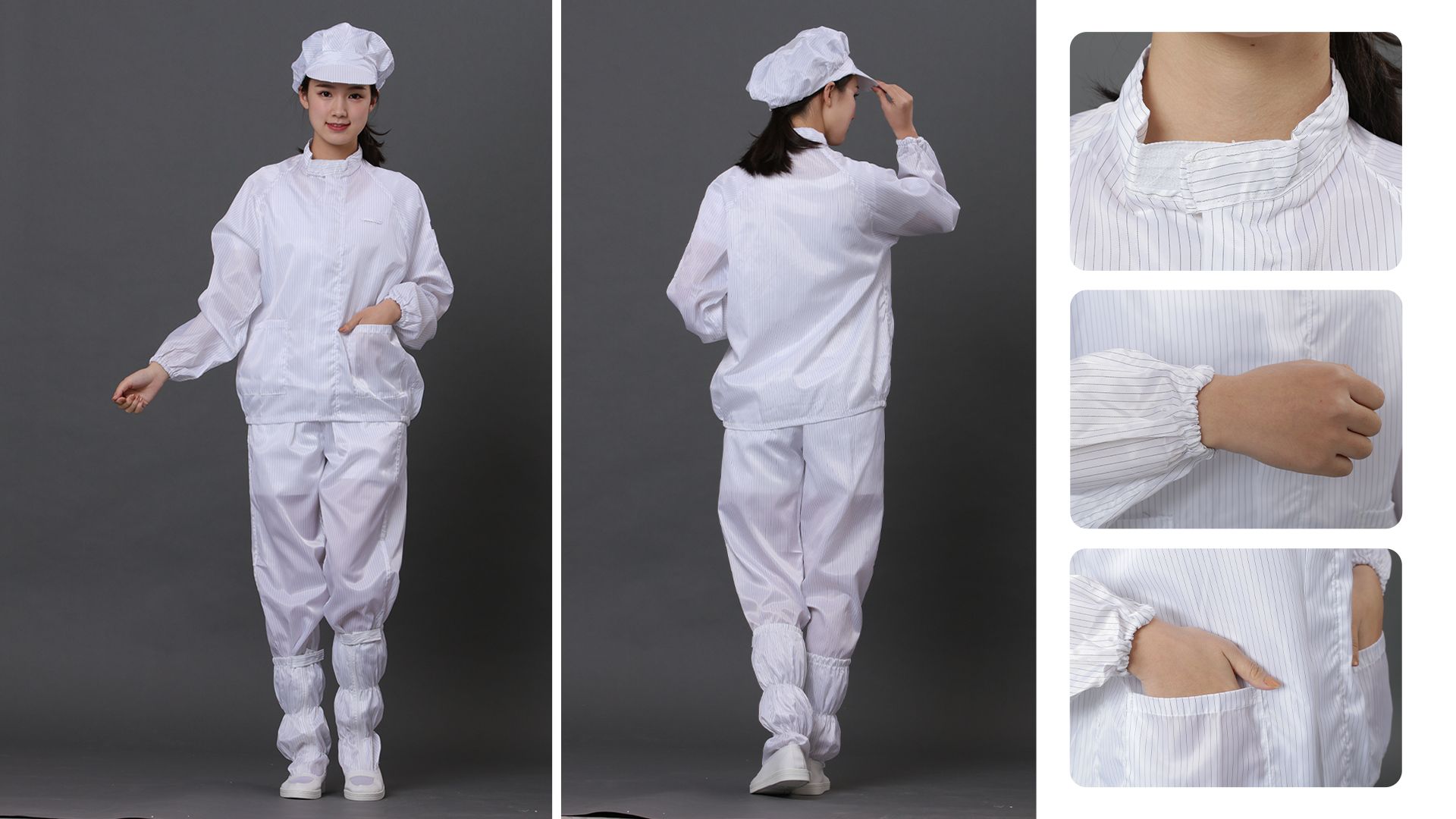
50 new smocks (same batch, surface resistance ~4×10⁶ Ω) were divided into three groups:
| Group | Laundry method | Detergent | Fabric softener | Drying |
|---|---|---|---|---|
| A (correct) | Industrial or home – cold/warm | Mild, pH neutral | No | Low heat or air dry |
| B (softener) | Same as A | Same | Yes – standard amount | Same |
| C (harsh) | Hot wash (60°C) | Standard strong detergent | No | High heat |
After 25 cycles, we measured surface resistance per ANSI/ESD STM2.1. Pass = ≤1×10⁸ Ω.
Results:
| Group | Pass rate | Median resistance (Ω) | Failure mode |
|---|---|---|---|
| A (correct) | 100% | 7.2×10⁶ | None |
| B (softener) | 66% | 1.9×10⁸ (marginal) | Coated conductive fibers – high resistance |
| C (harsh) | 88% | 4.5×10⁷ | Fabric shrinkage, some broken carbon grids |
Bottom line: Fabric softener ruined one third of the smocks after only 25 washes. Harsh washing weakened but did not completely kill them.
Why fabric softener is the #1 killer of ESD garments
Fabric softeners work by depositing a waxy, fatty coating on fibers. That coating makes clothes feel soft and reduces static cling – exactly what you do not want on an ESD garment. The coating insulates the conductive carbon fibers, raising surface resistance dramatically.
We measured smocks washed with softener:
| Wash cycle | Median resistance (Ω) | Pass/fail |
|---|---|---|
| 0 (new) | 4.1×10⁶ | Pass |
| 5 | 6.2×10⁶ | Pass |
| 10 | 1.8×10⁷ | Pass |
| 15 | 5.5×10⁷ | Pass (marginal) |
| 20 | 1.2×10⁸ | Fail (≥1×10⁸) |
| 25 | 1.9×10⁸ | Fail |
After only 15 washes, resistance was already climbing toward the limit. By 20 washes, failure.
A real case: Mystery ESD failures traced to softener
A medical device assembly plant had an intermittent ESD problem on one line. Wrist straps tested fine. Floor resistance was good. But every few weeks, a batch of PCBs would show gate oxide damage.
The plant had recently switched to a cheaper industrial laundry service. We tested their smocks – surface resistance averaged 2.3×10⁸ Ω. The laundry was using a standard “softener added” cycle.
The plant switched to a no‑softener, neutral pH detergent cycle and re‑tested smocks weekly. Resistance dropped back to <1×10⁷ Ω after three washes (softener residue eventually washed out). The ESD failures stopped.
Correct ESD garment laundering – the rules
| Do | Don’t |
|---|---|
| Wash at 40°C max | Use fabric softener or anti‑static sheets |
| Use mild, pH‑neutral liquid detergent | Use chlorine bleach or oxygen bleach |
| Turn garments inside out | Dry clean |
| Tumble dry low or line dry | Iron directly over carbon grid |
| Test resistance every 25 washes | Mix with non‑ESD garments (lint) |
Detergent recommendation: Any free & clear liquid detergent without softeners, fragrances, or optical brighteners. Powder detergents can leave abrasive residue.
Industrial laundry specification: Provide your laundry service with a written spec: “No softener, no bleach, max 40°C, mild detergent, low heat dry.”