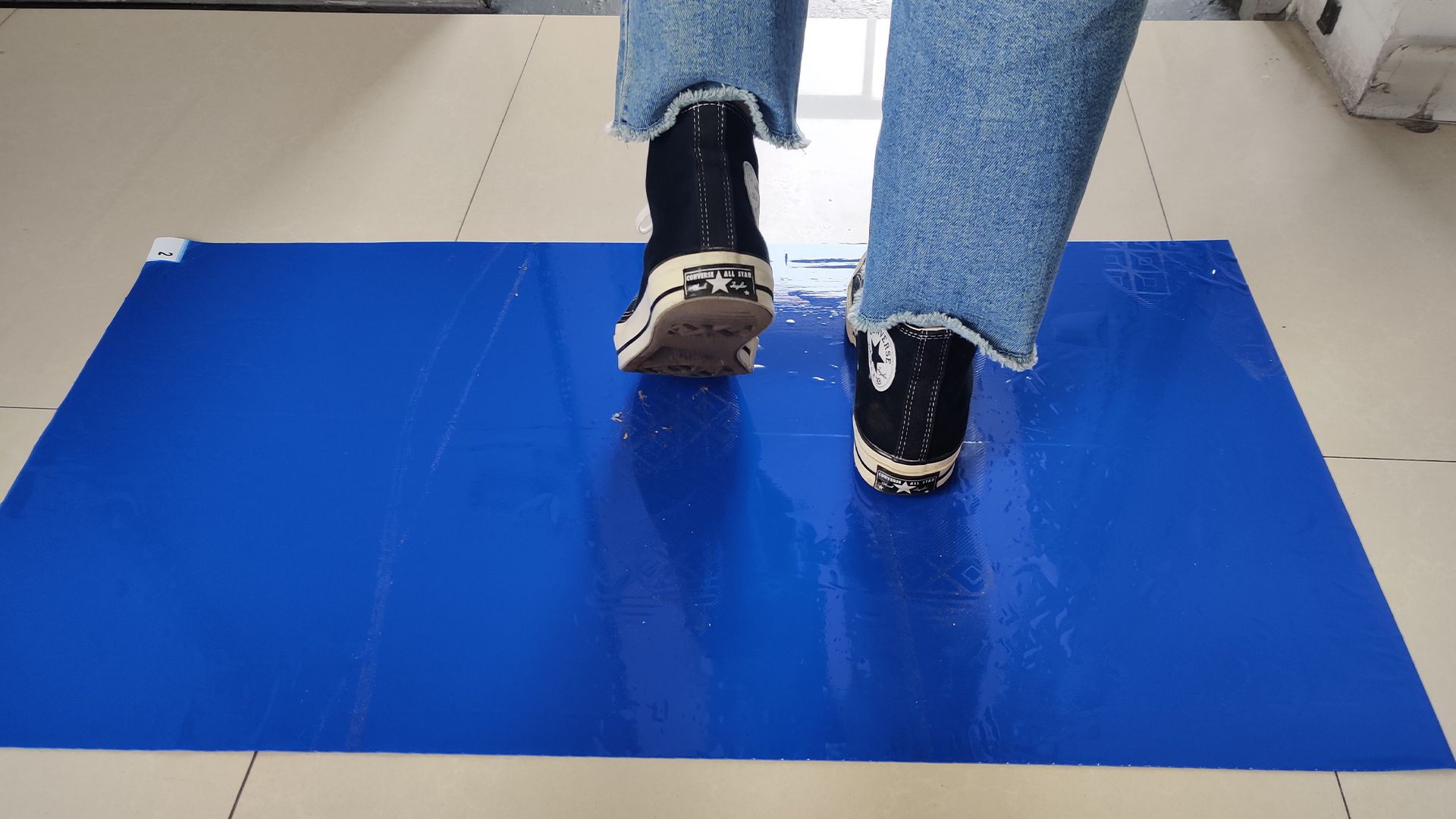
Discover how cleanroom sticky mats reduce foot-borne and wheel-borne contamination by up to 99.8%. It includes performance data, a selection guide, compliance standards, and best practices for semiconductor, pharmaceutical, and medical device manufacturing.
Introduction: The Invisible Threat at Your Doorstep
Contamination is the silent enemy of cleanroom operations. A single microscopic particle can short-circuit a semiconductor chip, compromise a pharmaceutical batch, or render a medical device unsafe. While high‑efficiency filtration and strict gowning protocols are essential, the primary entry point for contaminants is often overlooked: the soles of shoes and the wheels of carts.
Studies suggest that foot‑borne and wheel‑borne contamination can reduce product yield by as much as 20% in critical manufacturing environments. This is where cleanroom sticky mats become indispensable. When positioned and maintained correctly, these adhesive entry systems serve as an effective first line of defense, removing up to 99.8% of particulate contamination before it ever crosses your cleanroom threshold
How Effective Are Sticky Mats?
| Performance Metric | Disposable Sticky Mat | Reusable Polymeric Mat |
|---|---|---|
| Foot‑borne particle reduction | ≥ 99% | Up to 99.8% |
| Wheel‑borne particle reduction | ≥ 99% | Up to 99.4% |
| Airborne particle reduction (≥0.5 μm) | Not specified | Up to 75% |
| Antimicrobial effectiveness | Optional (≥99% growth inhibition) | Up to 99.9% (silver‑ion based) |
| Expected service life (single mat) | Until layers are consumed | 3–5 years |
| Microbial growth inhibition | Depends on specification | Active for product life |
Types of Cleanroom Sticky Mats
| Feature | Disposable (Peel‑Off) Mats | Permanent Polymeric Mats |
|---|---|---|
| Material | Multi‑layer adhesive‑coated polyethylene film | High‑performance polymer (van der Waals adhesion) |
| Usage | Peel and discard used layers | Clean in place; reusable for 3–5 years |
| Best for | High‑traffic gowning rooms, ISO 5–8 entry points | High‑traffic critical cleanrooms, semiconductor fabs |
| Contaminants captured | Dry particles, dust, light oils | Particles, microorganisms, some airborne contaminants |
| Maintenance | Peel when visibly soiled | Wash with detergent; may be needed several times daily |
| Waste generation | Higher (disposal of used layers) | Lower (single mat lasts years) |
| Upfront cost | Lower | Higher |
| Long‑term cost | Higher due to consumables | Lower over 3‑5 year lifecycle |
Standards and Compliance
Cleanroom sticky mats must comply with several industry standards to ensure reliable performance. The key applicable standards include:
| Standard | Scope |
|---|---|
| ANSI/ESD S20.20 | Establishes requirements for ESD control programs, including worksurface resistance limits (10⁶–10⁹ ohms) |
| IEST-RP-CC011 | Covers terminology and definitions for contamination control in cleanroom environments |
| ASTM E2312 | Provides standard practices for tests of cleanroom materials and products |
| IEST-RP-CC016 | Addresses non‑volatile residue (NVR) deposition rates in cleanrooms |
| USP <795>, <797>, <800> | Aligns with pharmaceutical compounding and sterile preparation requirements |
For semiconductor and electronics applications, products are tested as per standard test methods required by ANSI ESD S20.20 (equivalent to IEC 61340-5-1) standards
Adhesive Strength Specifications
Understanding adhesive strength specifications helps match the right mat to your contamination load. Typical measured values include:
| Parameter | Typical Value | Test Method |
|---|---|---|
| Upper layer adhesive force | 180 ± 40 g / 25 mm | ASTM D3121 (Ball Tack) |
| Lower layer adhesive force | 600 ± 100 g / 25 mm | KSA 1107 |
| 180° peel strength | 300–500 g / 25 mm | GB2792-98 / GB2792-81 |
| Single layer thickness | 0.035 – 0.045 mm ± 0.005 mm | Manufacturer specification |
| Heat resistance | Up to 60–70°C | Operational limit |
Standard ball tack measurement (ASTM D3121) for cleanroom sticky mats is typically <60 cm, with upper layer adhesion around 180g and lower layer adhesion around 600g. Adhesive coating thickness typically ranges from 5–7 μm per layer