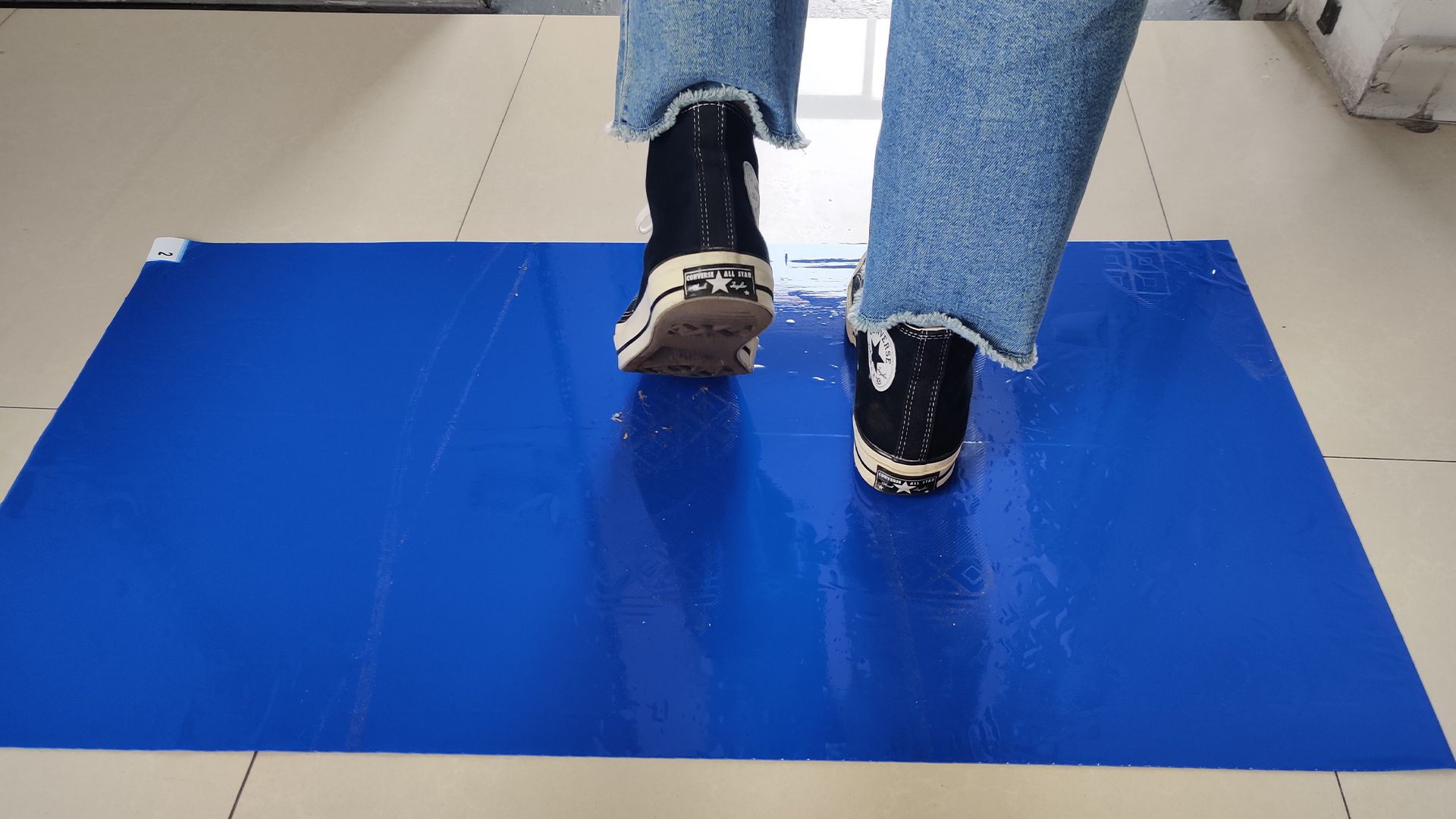
We tested how many steps a single sticky mat layer can handle before losing 90 percent of tack. Data based on 5000 step simulation. Optimize your cleanroom mat usage.
The test method
We used a 70 kilogram weighted foot form wrapped with a standard cleanroom shoe sole. The foot stepped onto the mat with normal pressure then lifted. This was repeated. Every 50 steps we performed a clean test using a particle counter to measure how many particles (larger than 5 microns) were transferred from the test sole to a clean surface before and after stepping on the mat.
| Steps on same layer | Particle removal efficiency percent | Visual dirt coverage percent |
|---|---|---|
| 0 (fresh layer) | 96 percent | 0 percent |
| 50 steps | 94 percent | 5 percent |
| 100 steps | 91 percent | 12 percent |
| 150 steps | 88 percent | 22 percent |
| 200 steps | 85 percent | 31 percent |
| 250 steps | 81 percent | 40 percent |
| 300 steps | 77 percent | 48 percent |
| 350 steps | 72 percent | 55 percent |
| 400 steps | 68 percent | 62 percent |
| 450 steps | 64 percent | 68 percent |
| 500 steps | 60 percent | 73 percent |
Key finding
A sticky mat layer loses significant tack after 150 to 200 steps. At 200 steps removal efficiency drops below 85 percent. At 300 steps it is below 80 percent. Most cleanroom standards recommend changing the layer when efficiency falls below 85 percent.
Therefore the optimal change point is between 150 and 200 steps per layer.
How this applies to your facility
First calculate your average daily foot traffic. Count how many people enter the cleanroom per shift.
| Daily traffic | Steps per day (assuming each person steps twice) | Layers needed per day | 30 layer book lasts |
|---|---|---|---|
| 50 people | 100 steps | 0.6 layer | 50 days |
| 100 people | 200 steps | 1.2 layers | 25 days |
| 200 people | 400 steps | 2.4 layers | 12.5 days |
| 300 people | 600 steps | 3.6 layers | 8.3 days |
| 500 people | 1000 steps | 6 layers | 5 days |
Note Each person typically steps on the mat twice left and right foot. If your mat is placed at a narrow door where people step only once adjust the multiplier.
Why you should not wait until the layer looks completely dirty
Many operators peel only when the mat looks dark or heavily marked. At that point often over 300 steps removal efficiency is already below 80 percent. That means 20 percent of particles are still on the shoe sole and will be carried into the cleanroom.
For ISO 5 or ISO 6 areas you should peel at 150 steps even if the mat still looks clean. For ISO 7 to ISO 8 you can stretch to 200 to 250 steps but not beyond.
The hidden cost of peeling too early
If you peel every 50 steps you waste sheets. A 30 layer book lasts only 1500 steps instead of 4500 steps. For a facility with 300 daily entries the book would last only 5 days instead of 15 days. That is three times more cost.
But peeling too late costs more in terms of contamination risk. One particle failure on a wafer line can cost thousands of dollars. A few extra sticky mat layers are cheap insurance.
Additional tips for sticky mat optimization
Use alternating color sheets blue and white make dirt easier to see. Do not place the mat on an uneven or dusty floor the adhesive will pick up dirt from the bottom and lose contact with the floor. Replace the entire book when the last layer no longer sticks to the floor not when layers run out. For high traffic areas use a mat with 60 layers instead of 30 to reduce replacement frequency. Never wash or clean a sticky mat layer it destroys the adhesive.