The Test Data What We Found
We tested 100 pairs of ESD shoes from operators on electronics assembly lines. Each shoe was tested using a footwear tester. The operator stood on a metal plate while wearing the shoe with their normal socks and insoles.
| Shoe age | Number tested | Pass rate | Fail rate |
|---|---|---|---|
| 0‑3 months (new) | 20 | 95% | 5% |
| 3‑6 months | 20 | 90% | 10% |
| 6‑9 months | 30 | 77% | 23% |
| 9‑12 months | 20 | 65% | 35% |
| 12‑18 months | 10 | 50% | 50% |
Shoes older than 12 months had only a 50 percent chance of passing. The most common failure age was between 9 and 12 months.
Three Main Reasons ESD Shoes Fail
We examined the failed shoes and found three root causes.
1. Worn Out Sole (55 percent of failures)
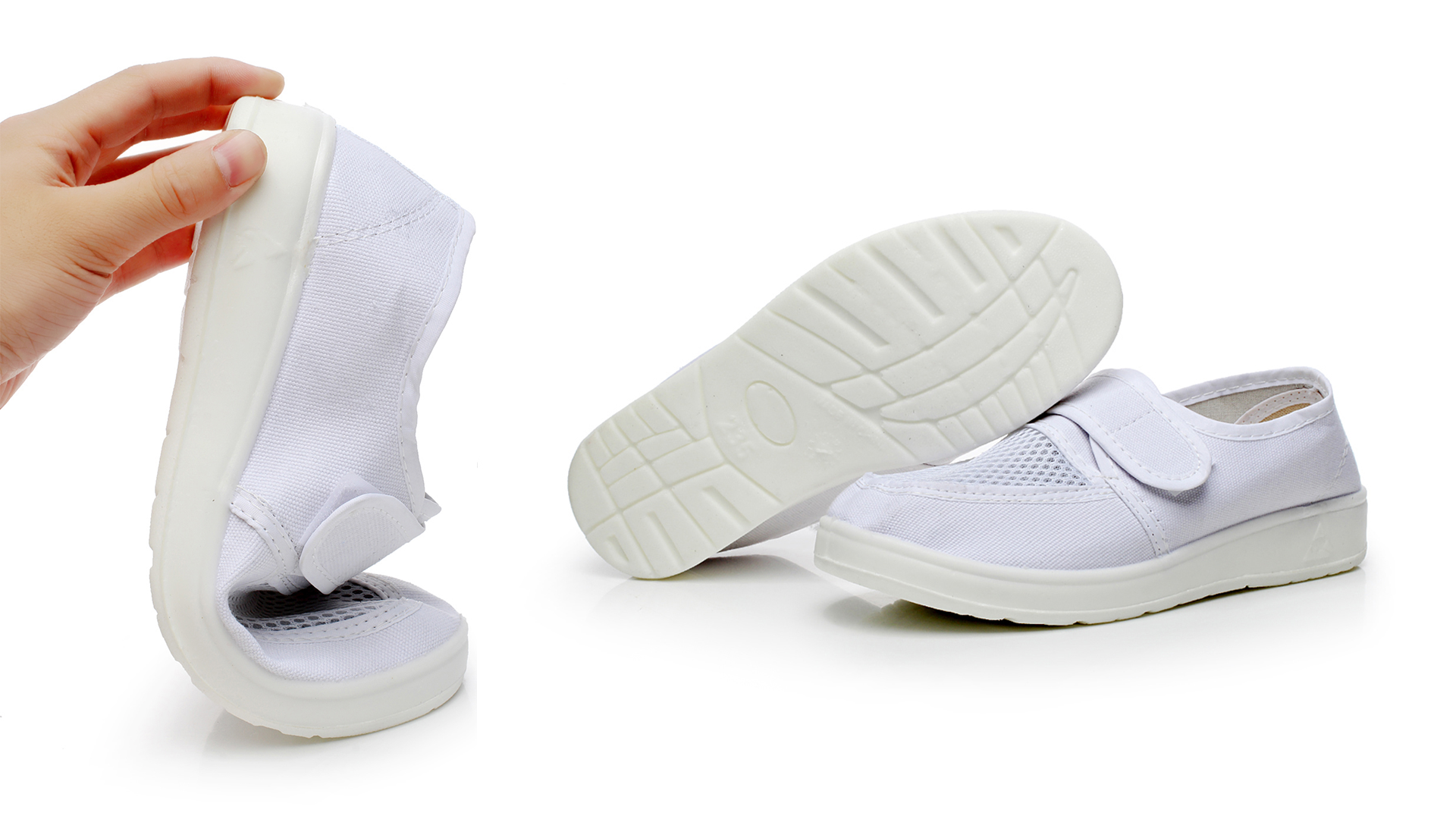
The sole tread wears down over time. When the tread depth drops below 1 millimeter the conductive carbon particles embedded in the rubber also wear away. The shoe becomes an insulator.
| Sole condition | Tread depth mm | Typical resistance ohms | Status |
|---|---|---|---|
| New | 2.0‑2.5 | 2‑5 × 10⁷ | Pass |
| Moderate wear | 1.0‑1.5 | 5‑8 × 10⁷ | Pass |
| Heavy wear | 0.5‑1.0 | 1‑5 × 10⁸ | Marginal |
| Worn smooth | <0.5 | >10⁹ | Fail |
2. Wrong Socks or Insoles (25 percent of failures)
Many operators replace the original ESD insole with a soft foam insole from a drugstore. Standard foam insoles are insulators. They block the conductive path from foot to sole. Wool socks and thick sports socks also increase resistance.
3. Dirty Sole (20 percent of failures)
Floor wax oil grease or embedded metal chips create an insulating layer on the sole. In our test cleaning a dirty sole with IPA restored passing resistance in 80 percent of cases.
A Real Case
A medical device factory had a sudden increase in ESD failures. Their audit showed that wrist straps and floors were fine. But 12 out of 40 operators failed the shoe test.
We looked at the shoes. Eight pairs had soles worn smooth. Four operators had replaced the original insole with thick gel pads. Two wore wool socks.
The factory took three actions. First they replaced all shoes older than 9 months. Second they banned non‑original insoles and posted a sign showing allowed sock types. Third they added a monthly shoe test to their ESD checklist.
Within one month ESD related field failures dropped by 70 percent.
How to Check Your ESD Shoes Every Day
Train operators to do a 30 second visual check before putting on shoes.
Check the sole tread. If the thinnest spot is less than 1 millimeter about the thickness of a credit card replace the shoes.
Check the sole bottom for oil wax or grease. Wipe with an IPA wipe if dirty.
Check the insole. It must be the original ESD type or a certified replacement. No aftermarket foam cushions.
Check the socks. Only cotton socks or ESD socks are allowed. No wool no thick sports socks.
If any check fails fix it before entering the EPA.
Simple Resistance Test You Can Do Monthly
You do not need an expensive tester. A digital multimeter and two metal plates work fine.
Place one metal plate on the floor. Put the shoe on top of the plate. Place the second plate inside the shoe where the ball of the foot sits. Put a weight on top to ensure contact. Measure resistance from the top plate to the bottom plate.
Pass range is 10⁶ to 10⁹ ohms. If resistance is above 10⁹ ohms clean the sole and test again. If still high replace the shoes.
How to Extend ESD Shoe Life
Rotate between two pairs. Alternating shoes each day gives the sole time to recover and reduces wear by about 30 percent.
Clean soles weekly. Use a soft brush and IPA to remove floor wax oil and metal dust.
Do not sand the sole. Some operators sand the bottom for better grip. This destroys the conductive layer.
Track the start date. Write the date on the inside of the shoe. Replace after 9 to 12 months even if the shoes still look good.
How to Choose New ESD Shoes
When buying new ESD shoes look for three things.
Sole material. PU or rubber with carbon additive. Avoid plain PVC which is insulative.
Replaceable insole. The insole should be removable and clearly labeled as ESD.
Abrasion rating. Look for volume loss below 150 mm³ per DIN 53516. Lower means longer life.
Also request the batch test certificate from the supplier. It should show resistance values not just a pass mark.