What is an anti‑static brush and how does it work?
An anti‑static brush is a tool specifically designed to eliminate static electricity. You might wonder – how can a simple “brush” get rid of static?
The secret lies in two things: materials and mechanism.
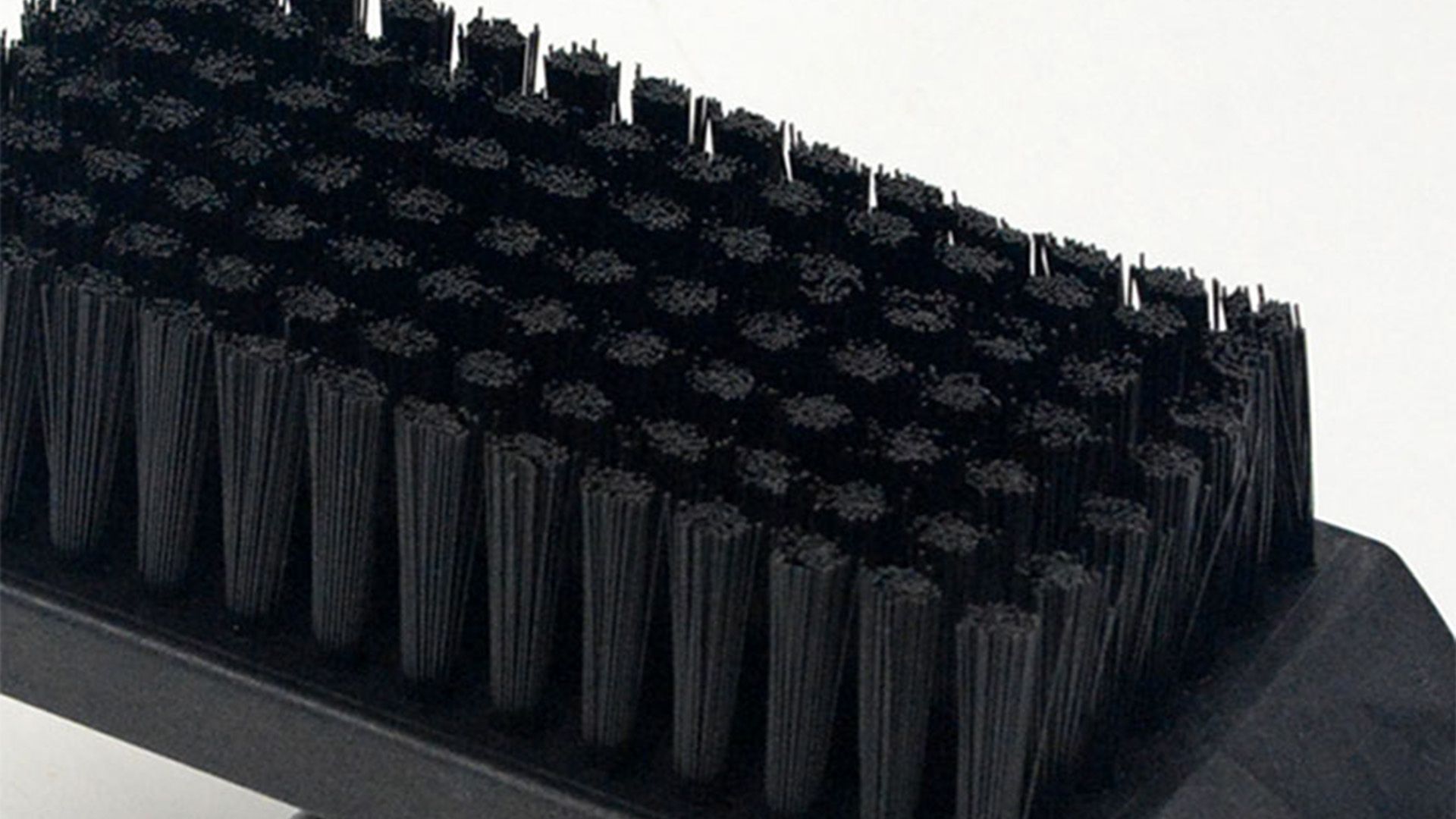
Materials: Anti‑static brushes are typically made from conductive fibres such as carbon fibre, stainless steel wire, or special nylon infused with conductive carbon powder. The handle is also made of conductive plastic or metal, ensuring that static charges flow away smoothly instead of building up on the brush itself.
Mechanism: An anti‑static brush combines two static elimination principles – contact discharge and corona discharge.
Contact discharge: When the brush bristles touch a charged object, the static charge flows from the object through the bristles and a grounding wire directly to the earth – like water running down a pipe.
Corona discharge: Even if the bristles don’t make direct contact, keeping the fibre tips 2‑3 mm away from a charged surface can still ionise the surrounding air under the intense electric field at the tips. The resulting positive and negative ions neutralise the static charge on the object.
What’s truly amazing is that an anti‑static brush works without any external power supply. As long as it is properly grounded, the conductive resistance can be as low as 0.3 Ω, with a critical voltage below 30 V. That means it can capture even the faintest static charge – the kind you can’t even feel – and safely escort it back to the earth.
Types and materials of anti‑static brushes
Anti‑static brushes come in many shapes, sizes, and bristle materials, each suited for different tasks.
| Type | Bristle material | Typical use |
|---|---|---|
| Soft fibre brush | Carbon‑filled nylon / conductive plastic fibre | Cleaning sensitive optics, LCD screens, PCB assemblies |
| Medium brush | Carbon fibre blend | General electronics assembly, cleaning components |
| Hard brush | Stainless steel wire | Removing stubborn debris, earthing large surfaces |
| Brush with ground clip | Conductive bristles + metal clip | Direct grounding for workbenches or machinery |
The handle can be a simple conductive plastic rod or a more ergonomic design with a built‑in grounding terminal. Some brushes even come with a long tail wire and alligator clip for easy connection to a ground point.
Where are anti‑static brushes used?
Anti‑static brushes are indispensable in environments where static control is critical:
Electronics manufacturing & repair – cleaning dust off PCBs, removing solder balls, or brushing away debris from connectors without damaging components.
Semiconductor & cleanrooms – preventing ESD (electrostatic discharge) failures in chip production.
Printing & packaging – eliminating static that causes paper jams or ink misalignment.
Automotive & aerospace – cleaning sensitive control modules and sensors.
Laboratories & medical device assembly – protecting delicate electronics in diagnostic equipment.
Home use – dusting computer towers, stereo equipment, or even your TV screen (with a soft ESD brush).
How to choose the right anti‑static brush
When shopping for an anti‑static brush, keep these factors in mind:
Bristle hardness – For delicate electronics, always choose soft fibre brushes. Hard stainless steel brushes are only for heavy‑duty applications.
Grounding method – Ensure the brush can be effectively grounded. Models with a built‑in ground wire and clip are the most reliable.
Handle material – A conductive handle is a must; avoid ordinary plastic handles that can hold static.
Bristle length & shape – Long, thin bristles are good for reaching tight spots; wide brushes cover more surface area.
ESD safety rating – Look for brushes that meet ANSI/ESD S20.20 or IEC 61340‑5‑1 standards.
Proper use and maintenance
Using an anti‑static brush correctly is simple but important:
Always connect the grounding clip to a verified ground point (e.g., an ESD workbench ground).
Before brushing, test the brush’s resistance with an ESD meter – it should be below 10⁹ ohms for dissipative brushes or below 10⁴ ohms for conductive ones.
Brush gently; do not press hard on sensitive components.
Clean the brush regularly with isopropyl alcohol to remove accumulated dirt and oils. Never use it on live circuits.
Replace the brush if bristles become frayed or the handle loses conductivity.