What is a PVC Grid Curtain
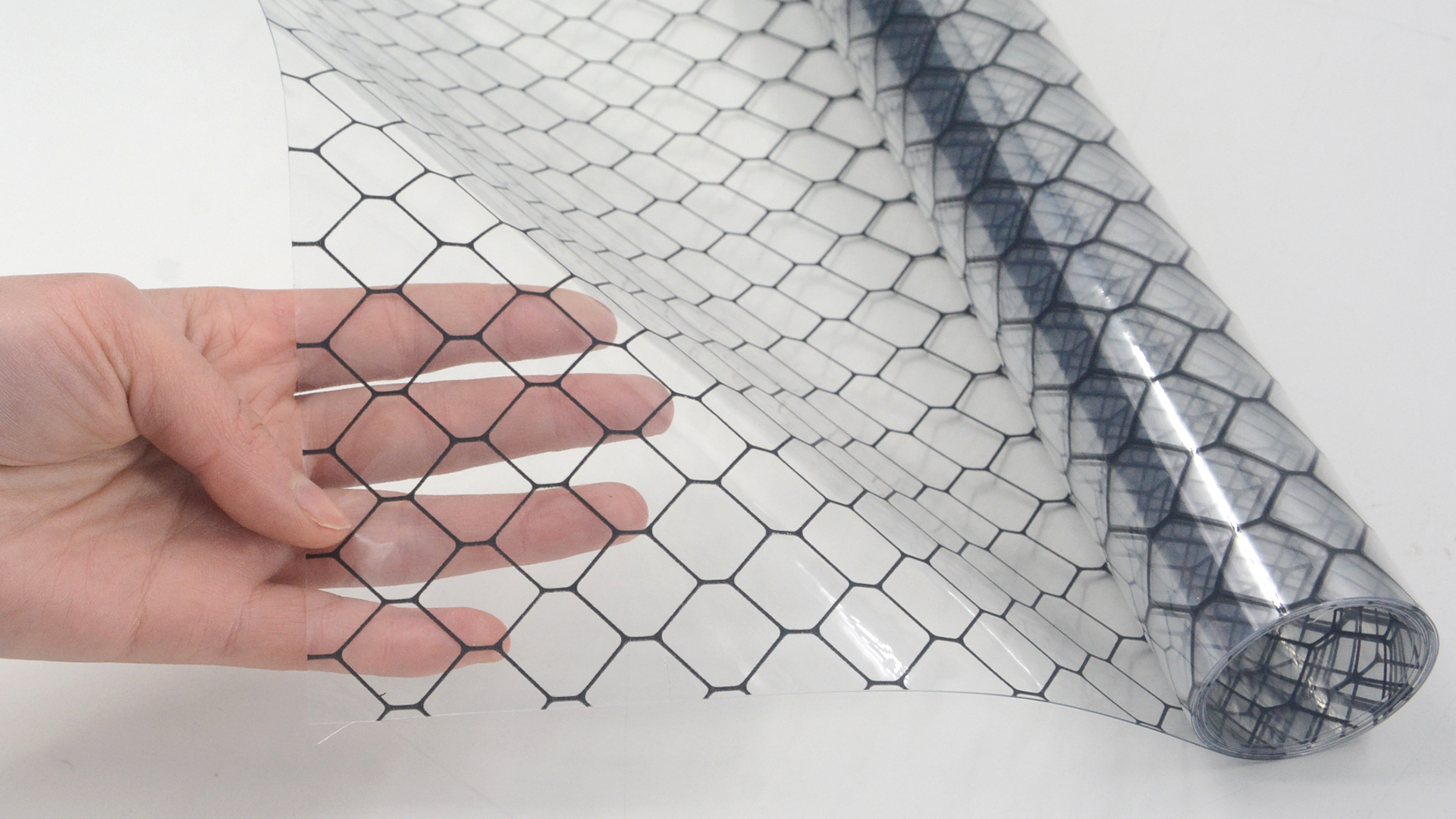
A PVC grid curtain is a strip door made from flexible polyvinyl chloride material. The curtain consists of overlapping strips or a solid sheet. A conductive grid pattern is printed or embedded into the PVC. This grid provides the anti‑static property.
The curtain hangs from an aluminium or stainless steel track. It allows people, carts, and forklifts to pass through easily. After passage, the strips fall back into place, maintaining separation.
Key characteristics:
Transparent – visibility through the curtain
Flexible – withstands impacts without damage
Anti‑static – drains static charge safely
Easy to clean – wipe with IPA or detergent
Why Anti‑Static Matters
Standard PVC is an insulator. When you walk through a plain PVC curtain, friction generates static charge. The curtain can hold thousands of volts. When you touch a component or a workbench after passing through, you may discharge that static into sensitive electronics.
This is called triboelectric charging. It is invisible but destructive.
An anti‑static PVC grid curtain solves this problem. The conductive grid drains static charge to ground. Measured surface resistance on the grid area should be between 10⁴ and 10⁶ Ω/□. This is low enough to prevent charge buildup but high enough to avoid sudden discharge.
We tested a standard PVC curtain against an anti‑static grid curtain under the same conditions:
| Test condition | Standard PVC curtain | Anti‑static grid curtain |
|---|---|---|
| Surface resistance (Ω/□) | >10¹² (insulator) | 8.5 × 10⁵ (conductive) |
| Voltage generated after walking through | 3800 – 5500 V | <100 V |
| Static decay time (5000V to 100V) | >60 seconds | <0.3 seconds |
The anti‑static curtain reduces static risk by more than 95 percent.
Core Benefits of PVC Grid Curtains
| Benefit | Description |
|---|---|
| Static control | Conductive grid drains charge, protecting ESD sensitive devices |
| Transparency | Operators see through the curtain, reducing accidents |
| Flexibility | Withstands impacts from carts and forklifts |
| Easy cleaning | Wipe with IPA or mild detergent |
| Temperature insulation | Reduces air exchange between zones, saving energy |
| Particle barrier | Blocks dust and insects from passing through |
| Cost effective | Much cheaper than hard walls or automatic doors |
Applications in Electronics Manufacturing
| Area | Why use PVC grid curtain |
|---|---|
| Cleanroom entry | Reduce dust entry while maintaining ESD safety |
| Workstation separation | Isolate soldering area from assembly area |
| Material pass‑through | Allow cart passage without opening hard doors |
| Humidity controlled zones | Keep dry air in, moist air out |
| Equipment enclosures | Enclose pick‑and‑place machines to contain dust |
| Paint booths | Contain overspray while allowing access |
How to Choose the Right PVC Grid Curtain
Grid pattern
The grid spacing affects conductivity. Typical options:
10 mm × 10 mm – most common, good for general ESD areas
20 mm × 20 mm – less conductive but more transparent
Thickness
0.5 mm – lightweight, suitable for low traffic areas
1.0 mm – standard for most cleanroom applications
2.0 mm – heavy duty for high traffic or cold rooms
Color
Transparent with black grid – standard, good visibility
Transparent with white grid – for dark backgrounds
Yellow – insect repellent for food areas
Blue – visible in cleanrooms
Mounting track
Aluminium – lightweight, low cost
Stainless steel – cleanroom compatible, corrosion resistant
Installation Tips
Step 1 Measure the doorway width and height.
Step 2 Cut the track to size. Mount it above the opening.
Step 3 Cut the PVC strips to the correct length (floor to track).
Step 4 For strip curtains, overlap each strip by 20‑30 mm.
Step 5 For sheet curtains, mount the sheet on a roller or hinge.
Step 6 Ensure the bottom of the curtain touches the floor for full sealing.
Step 7 Connect the conductive grid to a ground point (earth).
Important: The grid is only anti‑static if it is grounded. A copper grounding wire must connect the track or curtain edge to the building ground.
Maintenance and Cleaning
| Task | Frequency | Method |
|---|---|---|
| Wipe surface | Weekly | Use IPA and a cleanroom wipe |
| Check grounding | Monthly | Measure resistance from grid to ground point (should be <10⁶ Ω) |
| Inspect for damage | Monthly | Look for tears, cracks, or missing grid sections |
| Replace strips | As needed | Damaged strips lose anti‑static property |
Do not use abrasive cleaners. Do not scrub the grid pattern aggressively – it may wear off.
Real World Example
A medium‑sized PCB assembly plant had an intermittent ESD problem. About 1.2 percent of boards failed after burn‑in. The plant had ESD floors, wrist straps, and ionizers. The failures continued.
We investigated the material pass‑through area. Operators pushed carts through a standard PVC strip curtain between the warehouse and the assembly floor. The curtain was not anti‑static. When operators walked through, they accumulated static charges over 4000V.
The plant replaced the standard curtain with an anti‑static PVC grid curtain connected to ground. Within two weeks, the failure rate dropped to 0.3 percent. The curtain cost less than 500 dollars.
When Not to Use PVC Grid Curtains
While versatile, grid curtains are not suitable for every situation:
ISO 5 and above cleanrooms – may shed particles over time; use hard walls
High temperature areas (>60°C) – PVC softens and deforms
Solvent heavy environments – acetone and some chemicals damage PVC
Vacuum chambers – PVC outgasses and collapses
For these cases, consider polyurethane or silicone curtains.